Saturday, April 22, 2023

Review: Beyond the Wild Blue: A History of the US Air Force

Beyond the Wild Blue 

by Walter J. Boyne, Colonel, USAF (retired)

1998: St. Martin's Griffin

Boyne took on a huge task here, a single-volume history of the Air Force’s first 50 years pressed into 321 pages plus appendices.  For the most part, he delivers very well. He’s a good writer, knows his subject, loves the Air Force but is willing to criticize it, and has the right touch for mixing the anecdotal and the epic. I’m not sure the task could have been done much better without doubling the length.  

Boyne covers the organizational and policy issues throughout.  The terms and policies of Secretaries of Defense and the Air Force, Presidents, Chiefs of Staff, and the like are all chronicled. So are major debates like strategic v. tactical airpower.


Most of the history and detail about operations is, of course, about flying.  I’m not an expert on the history of the flying side, so I won’t attempt to critique what Boyne might have gotten right or wrong. I will say that, to nonflier, this book reads as an understandable, well-explained, cogent account of activities that shaped, not just American airpower, but often the world. The evolution and changes of the major commands and organizations are here, and so are the lives of the flyers, maintainers, and support personnel at every level.  The descriptions of the planes and other weapons are compact, accurate to my knowledge (I did read a lot on the old airplanes), and fitted into the bigger context of strategy and tactics. 

I am an expert on missiles and military space programs, so this is an unusual review, one focused mainly on one side of the story That means I largely skipped over the main events before those programs began, including World War II, the post-war reorganization, and Korea. That also means there’s more of a focus than a flyer, or a general reviewer, would have on perceived errors and misunderstandings. 

Boyne’s Cold War ethos and solid support of all American’s modern wars have drawn criticism, some of it valid. Still, his view jibes with what military and civilian leaders thought at the times, and the “Cold War mindset” is to me, a Cold Warrior who spent years in a missile silo holding the keys to Hell, basically accurate. 

 His belief that Vietnam was a just war and we almost won it in 1972 are not popular opinions, although that’s not to say he’s wrong.  (Personally, I don’t think we could have won in 1972 no matter what you think of the effectiveness of the bombing: the ground forces, with Vietnamese troops of uneven quality and American troops reduced greatly in number, weren’t adequate to take full advantage of the damage aircraft did to the enemy.)

There’s no denying that American aviators, as Boyne vividly describes, valiantly did their duty In Vietnam despite every possible handicap. They had to deal with airplanes and tactics meant to fight the USSR in Europe, constantly increasing micromanagement by non-experts thousands of miles away, rules of engagement that killed countless American flyers, the universal American misunderstanding of the enemy, and endless changes of strategy. Boyne gets a point for even-handedness here: while he despises the Communist regime, he admires the way their soldiers, no matter what we threw at them, time and again adapted and fought even harder. 

I naturally wondered how a book that is, by necessity, 90% about flying would treat missiles and space. The answer is, “pretty well.” Boyne’s admiration for the multiple missile development programs General Bernard Schriever juggled and advanced, mainly in the decade 1955-65, knows no bounds. He thinks it was more difficult to pull off than the Manhattan project, and he makes a good argument.

There are a couple of places where he errs. He paints the USAF as having a continually advancing missile program from about 1947 on.  It didn’t happen that way.  Some Air Force leaders, military and civilian, were strongly against pouring billions into this new and uncertain weapon system. Successes like the Consolidated MX-774 were not part of a well-planned program but often made advances and then faded back into purgatory.  Once Boyne gets to the Schriever era, though, he gets it right.  He does not address the second-class citizen status of the missile people who were, he notes, an entirely different personality type compared to the gung-ho pilots from the WWII era with whom they had to work.  Nothing was ever done to give missileers the prestige, rated status, or promotion opportunities of pilots, and if that sounds to you like the disgruntled complaints of an ex-missileer who wanted to be a fighter pilot but was medically disqualified, you’re absolutely right. Boyne should have paid some attention to this topic.  

There is one other item about missiles that deserves attention, and it’s connected to Boyne’s unusually positive treatment of the controversial Chief of Staff Tony McPeak (1990-94).   To Boyne, if McPeak left behind a lot of broken crockery, from drastic reorganizations to the despised “bus driver” uniform, most of that crockery needed breaking to face political, military, and budgetary realities.  He notes McPeak’s unpopularity with many officers. Having been an Air Force officer until 1992, I would characterize what I heard from officers in flying units more as blistering hatred, even though Boyne makes his case that some of the McPeak reorgs were necessary. 

Oddly, Boyne cites McPeak’s move of the ICBM force to Air Combat Command instead of Space Command as one of McPeak’s few mistakes.  It wasn’t. When his successor moved ICBMs to Space Command, it created a culture clash that never ended. To people in the two organizations, it made as much sense as moving fighter squadrons into Military Airlift Command because they both used airplanes.  I honestly can’t remember meeting a leader in missiles or space who thought it a good idea.  

A couple of other thoughts. 

Boyle describes the 1982 creation and 1988 formalization of Total Quality Management as an unqualified success, and maybe it was in some organizations in the earlier years. His book, though, goes well into the years when it became a slog through square-filling and buzzwords, and he should have revisited it. 

On a broader scale, Army and Navy advocates won’t much like the extent to which Boyne says that, from the 1950s on, many USAF management and other practices and organizational structures were envied or copied by the other Services: I don’t know much about that, so I’ll let historians fight it out.

Boyne gives space forces their du. He endorses the creation of Air Force Space Command and the original U.S. Space Command.  He does a good job of documenting the major programs, activities, and benefits.  He has a warm spot, as do I, for the 1960s CORONA satellite people who persevered through 12 failures (something that would never be tolerated today) to get workable spy satellites in place.  The only mistake he makes, which he partly remedies later on, is saying the differing strategies of the US and USSR (a few exquisite satellites vs. many shorter-lived ones) developed out of differing experiences, when it was always a deliberate choice based on the Americans’ superior technology and desire for more and more standing communications capability and higher-resolution imagery.  That and Boyne's failure to treat the battle over large vs. small satellites, which was still one-sided but at least  heating up by 1997, or examine reasons for the endless schedule and cost overruns of the major space programs, are my nitpicks on space.

This is as good a place as any to note the book’s biggest weakness from a scholarly viewpoint. Inexplicably, it has no footnotes or endnotes. While many sources are cited in the text, and there are lists of interviews and so on, there’s no way the book can rank as the definitive history it should be without specific references for the decisions, battles, and activities it describes.  

As a writer of a book for a broad readership, though, Boyne generally navigates these five decades well and in the end lands on the runway pretty close to the centerline.  He tells a coherent story, works many, many complex events into a timeline that gives the reader a consistently good picture of how the Air Force was and what it was doing at any given time, and has made a valuable contribution, even if not a flawless one. 


 Matt Bille is a writer, historian, and naturalist living in Colorado Springs. He is a former USAF officer. He can be reached at mattsciwriter@protonmail.com. Website: www.mattbilleauthor.com.


Sunday, April 16, 2023

Book review: Monsters of the Pine Tree State

 Monsters of the Pine Tree State: Cryptids & Legends of Maine 

Eerie Lights Publishing, 2023, 240pp.
by David Weatherly. Foreword by Loren Coleman, art by Sam Shearon  
Weatherly's state-by-state collection of cryptid stories has reached my birth state, Maine, so I looked forward to this one. It's a lot of fun. Since there have been two recent Maine cryptid books by Michelle Souliere, there is some inevitable overlap, and Weatherly cites her a couple of times. Nonetheless, there's some new material here and many interesting stories. 


We meet Wessie, the out-of-place anaconda (surely dead of cold by now), "black panthers," Bigfoot and other apelike cryptids, and more. Weatherly's curiosity extends to topics outside cryptozoology, so we read tales of bipedal wolflike creatures, hard-to-describe horrors, and of course the state's huge, famous spectral moose. My favorite section is, as often happens, the one on sea serpents and strange marine creatures, and Weatherly has a couple of items here I'd forgotten about.  Weatherly also notes the Wendigo of Maine's Indigenous people is nothing like the horned monster of modern lore. He does not footnote, but some sources are given in the text, and there's a bibliography There is a list of publications and websites, which oddly consists of titles only, without addresses or URLs. Shearon's cover and interior art is, as always, superb. This is an enjoyable book best read in the evening, by a fireplace, with pine trees visible outside the windows. Good work!

 Matt Bille is a writer, historian, and naturalist living in Colorado Springs. He can be reached at mattsciwriter@protonmail.com. Website: www.mattbilleauthor.com.

Read Matt's Latest book, Of Books and Beasts: A Cryptozoologist's Library. This unique reference offers a friendly skeptic's 400 reviews of books on cryptozoology, zoology, related sciences, and cryptozoological fiction. Your search for the world's new and undiscovered animals begins here!


Saturday, March 11, 2023

Book Review: Sea Serpents with TV's "Beast Hunter"

Sea Serpents: On the Hunt in British Columbia: or, How I Went to the Bottom of the Ocean, and a Giant Fish Accidentally got me Drunk  

by Pat Spain   


I finished a very enjoyable evening with biologist/host Pat Spain's new book on sea serpents of the Northwest. Much of the book is taken up with his adventures trying to film his TV show, which are often hilarious - he has a way of getting himself into very weird spots.  He also visits a First Nations family who tells him a story I'd never heard about capturing a baby "Cadborosaurus."   

When he gets to analyzing Caddy, he does a chart based on reported characteristics, (I'm not sure how many sightings or witness interviews he included) and includes a seashore-hunting cephalopod among his likely candidates. Spain unabashedly considers a coolness factor when offering ideas.  This isn't a scientific treatise, but it's terrific fun, and it's worth noting that Spin rejects most "cryptids" but thinks there's something to find here. 

 Matt Bille is a writer, historian, and naturalist living in Colorado Springs. He can be reached at mattsciwriter@protonmail.com. Website: www.mattbilleauthor.com.

Read Matt's Latest book, Of Books and Beasts: A Cryptozoologist's Library. This unique reference offers a friendly skeptic's 400 reviews of books on cryptozoology, zoology, related sciences, and cryptozoological fiction. Your search for the world's new and undiscovered animals begins here!


Wednesday, February 22, 2023

New paper shrinks Dunkelosteus! My impressions.


Thoughts on “A Devonian Fish Tale:  A New Method of Body Length Estimation Suggests Much Smaller Sizes for Dunkleosteus terrelli (Placodermi: Arthrodira)," a new paper by Russell K. Engelman, Department of Biology, Case Western Reserve University, Cleveland, OH 44106, USA, in Diversity

UPDATED 27 February 2023 after reading some of the scientific responses and having some discussions online.  Text corrections added 4 July 2023.

As Sam Gamgee once said, “This is an eye-opener, and no mistake.” There’s a lot here that strikes me as logical and innovative, although my conclusion as an interested amateur is that I interpret the variability in the figures presented a little differently than he does.   

Estimates of length for our best and largest adult skull specimen, CMNH 5768, range between 7 and 9 meters: up to 10m has been recently (2016)  claimed based on the inferognathal of one specimen, CMNH 5936, and that's not the only paper with that estimate. Engelman offers “…3.4 m for typical adults (CMNH 5768) with the largest known individuals (CMNH 5936) reaching 4.1 m.” The resulting animal looks very strange, but Engelman believed arthodires indeed have odd proportions compared to other fish. 


Me with a cast of CMNH 5768 at the Denver Museum of Nature and Science

I’m in complete agreement with the author’s first point: that inferring Dunk size and shape from the small Coccosteus cuspidatus (40 cm is a big one) is unreliable. I’ve said this many times: indeed, I hate the poor innocent animal more every time I see it dragged into the debate. (If you blow up the submersible Alvin 10 times, the result will be easily recognizable as a submersible, but it won’t be a workable one.) The point about the uncertainty in the use of shark jaws to calculate length also seems logical.

Here I have to stop again and emphasize my status as a well-read but necessarily limited amateur.  I'm a longtime student of Dunkleosteus, have read (I think) all the recent papers, and curate the FaceBook page Dunkleosteus terrelli. So I’m not qualified to judge the suitability of the orbit-opercular length (OOL) as a key component, but there’s a substantial margin of error. From my reading, we don't have a lot of high-quality skulls from large or even medium-sized placoderms to measure against, and the author has already noted arthrodires are proportionately weird.  The argument about relative sizes of body parts makes some sense, with the same caveat. Engelman notes that, in adapting the body mass formula used to estimate tarpon, he had to tweak it to allow for variations in the caudal fin reconstructions. That is logical, since the caudal fin has been argued over since the species was discovered. I’ve always been an advocate of a sharklike tail due to the surface area and muscle strength needed to move the tail fast while keeping precise angular control of a large animal whose weight is rather front-loaded, and I was very gratified when recent analyses (notably Ferron, et. al., 2017)  bore this out.

Engelman argues the apparent distance between the anus and tail, in the current picture of the animal, is unusually, and seemingly illogically, elongated. It looks like that could be so to me: it contributes (along with the  force/control point just made) to the fact I never liked the eel-like body plan as shown in Charles R. Knight’s illustrations (although I'm not exactly sure where the anus was supposed to be). Still, I don't know how this compares to similar-sized fishes. Engelman plunks for a short, squat body: while one known arthrodire (the oddly proportioned A. trinajsticae) is an exception, he argues the others line up reasonably well. Arthrodires, he notes, also have proportionately shorter snouts (although not greatly so) than other fish.

Everyone’s first question about Dunkleosteus is how long it was, and the second is what it weighed. Engelman looks at several ways to estimate body mass and concludes typical adult individuals of D. terrelli (i.e., the size of CMNH 5768) could reach weights of 950-1200 kg, although “More precise estimates might be obtainable via volumetric modeling.” (Interestingly, 950 is what a scientist in my yet-unpublished novel about this species comes up with, although she’s considering a conventionally proportioned Dunk about 7 m long.)  He notes that giant body size develops in animals because of pressures to become too big to be eaten or big enough to get high-quality prey and thinks the Dunk didn't need to be as large as we projected.  He suggests all the largest Devonian fishes, whether arthrodire, shark, or bony fish, topped out under 5 m, although he notes possible exceptions.  Still, it's not the general rule that matters most: it's what "made sense" to evolution at that time, with this species, and he needs more evidence.  

You’ve probably guessed by now that I think Engelman makes an interesting but not definitive case that our current estimates of length are too high, but I can’t picture a large adult measuring only 4 m. The massive head and armor needs, to me, a longer body for optimum balance and an adequate (but not overly long) moment arm going back to the caudal fin. A thunniform plan like a tuna’s makes for a very fast fish, but a tuna doesn’t have a couple hundred kilograms of extra weight at one end, a factor I think Engelman should have gone into a little more. I don't think his proposed Dunk in its shortest form would be fast enough or stable enough to catch prey more elusive than kelp.  The thoracic plates are short in proportion to length compared to smaller relatives, which might support Engelman's interpretation. Still, I went up to a museum in Denver specifically to look at this, and the plates appear to be going almost  straight back when they end, so the body's not starting to narrow significantly, vertically or horizontally,  at this point. I’m more inclined to shrink our friend CMNH 5768 to 7 m, although possibly a bit smaller. Basically, that means I’m guessing differently on how the uncertainty ranges in Engelman’s a paper come out in the flesh and how the overall body plan would work for a ocean predator. This is an important piece of work, but it's being disputed, and the argument over Dunk proportions is not over yet.


 Matt Bille is a writer, historian, and naturalist living in Colorado Springs. He can be reached at mattsciwriter@protonmail.com. Website: www.mattbilleauthor.com.

Read Matt's Latest book, Of Books and Beasts: A Cryptozoologist's Library. This unique reference offers a friendly skeptic's 400 reviews of books on cryptozoology, zoology, related sciences, and cryptozoological fiction. Your search for the world's new and undiscovered animals begins here!


Monday, February 13, 2023

Thanks to everyone at Superstars 2023

 I go to two writers' conferences in Colorado Springs each year if I can.  One is the Pikes Peak Writers Conference, a large and friendly gathering hosted by the Pikes Peak Writers Club and devoted to all aspects of writing. It's the one I suggest newcomers to writing might find most comfortable. Join us for April!

Pikes Peak Writers Conference

But there's nothing uncomfortable about Superstars, a conference that leans more toward business skills for writers but also has plenty of craft work.  There's also a lot of overlap between the instructors and the crowds at the two events. 

Superstars Writing Seminars | Teaching you the business of being a writer

Superstars features some extremely successful authors and agents like Jonathan Maberry and Jim Butcher on the author side.  It's a pretty intense three days (four if you take the extra workshop day) and offers the genuine camaraderie of what alumni call "the Tribe." 

I was able to attend two days this year at the Antlers Hotel in downtown Colorado.  The hosts, instructors, leaders, and volunteers (I did some airport driving) put together the largest and most successful event ever. 

I did one pitch to an agent, which resulted in some good advice although not an offer, and one "walking pitch" to the editor of a small press, who wanted to see my new book manuscript. I did a lot of talking and meeting people and trading advice. A few people even remembered that the last time I'd come to the social hour dressed as Harry Dresden. Maybe next year! 

Jonathan Maberry leads a panel on Saturday (either on the publishing industry or on short stories: I didn't record it at the time!)


Thursday, February 02, 2023

Roundup: of Paddlefish and Dino Models

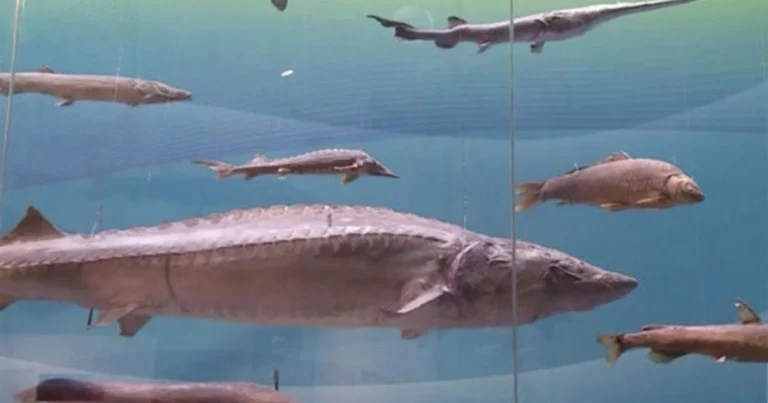
The Revelator counts the species that went extinct in 2022.  John R. Platt's article The Book of the Dead rounds up animals officially declared extinct or almost written off.  Platt has written off the huge Chinese paddlefish, reportedly reaching 7 meters: first declared extinct in 2020, it was the eventual victim of a huge dam built in 1981.

Chinese Paddlefish (WCBI TV, fair use claimed)

 I have, surprisingly, overlooked this publication until now. It has many interesting articles. 

As a collector of Dunkleosteus models and toys, I also occasionally acquire other species that grab my attention, so I keep an eye on what's coming out.  A new company called TNG has popped up, selling a variety of dinosaurs and prehistoric mammals. They have no Dunk, but the mammals have gotten some praise. However, the excellent page Dino Dad Reviews argues their designs involve a high degree of plagiarism. I'm avoiding them for now.


Thursday, January 26, 2023

NASA's Day of Remembrance


The Explorers


The souls departing Earthbound life

Rise to heaven’s plane

Soldier, sailor, priest, or king

The destiny's the same

But in an even higher realm

With stars always in view

Meet those lost in exploration

Remembering how they flew


Komarov toasts Gus Grissom

And Resnik hugs with Clark

Ramon and Chalwa share a tale

As they look beyond the dark

Adams shares his glory days

With Husband and McNair

And still they watch

And urge us on

To rise above the air.


Don’t cling to mother Earth, they’d say

God has given us the stars

There’s a reason we aspire

To cross the celestial bar

We gave our lives

(we don’t regret)

To push back the frontier

Remember us by challenging

And rising past your fears


Patseyev, Onizuka

Anderson and Brown

Salute each new endeavour

That lifts us from the ground

To every new thrust into space

They raise their glasses high

And remind us we were always meant

To reach beyond the sky.

- Matt Bille, space historian, 2014

Monday, January 09, 2023

Really cool plush Dunk


I just found a second type of plush Dunk toy, and Wow.  

This cuddly Dunk from “Soft time TOY Collectors" is not only much larger than the one I knew about, the Paleozoic Pals toy, but has surprising detail. The armor shield is cut and sewn so the edges come free of the body to hint at how the real animal is articulated.  There are textured pectoral and pelvic fins and even an anal fin. The designer used the lower-lobe interpretation of the tail, stringing two fins along its underside and one on top. The colors are beautiful, maybe even realistic. The interior of the mouth goes back a couple of inches. 

Although the fins have that odd, scalloped look you see on the Schleich vinyl model, the fish overall looks as realistic as a couple of the cheaper vinyls I have. I found this one on eBay: I don’t see them for sale anywhere else. I really love this Dunk Your kids will, too.


Sunday, January 08, 2023

Big Birds: Not a Legend After All?

 I never gave much thought to the appearance in cryptozoology of "giant bird" or "thunderbird" stories, because it's so hard to accurately estimate the size and distance of a flying bird and because huge nests (if they make nests) should be easily spotted.  Photos and films have turned out to be hoaxes, forced perspective, or too distant to identify.  Many of the "big bird" tales describe something more like a leathery pterosaur.  These have to be hoaxes or mistakes, though, because the descriptions match outdated ideas of pterosaurs and not what the real animals looked like.  

But a fellow who saw me on MonsterQuest called me yesterday, and his story deserves attention. 

NOTE: Slight update/edit to this post made on January 9.

Basil Coffman is retired from his latest job, in which he flew for 22 years for the Arizona Game and Fish Department. He has been a pilot for forty-plus years, with a long list of helicopter and fixed-wing ratings, and he stopped logging his hours years ago, sometime after hitting 20,000.   He has done everything for wildlife agencies, including flying caged condors to release points, tracking collared eagles in the air, and much more. He knows birds. 

On February 1, 2001, he was 45-50 miles north of Safford, Arizona, flying back from checking on some bighorn sheep. Over modestly mountainous terrain, he was about 1,500 feet above ground level (AGL), which puts his altitude at 5,000-5,500 feet. Behind him in his Piper Super Cub was a wildlife biologist from the same agency, also with enormous experience in birds. I'm not naming him yet because he's out of reach on a hunting/fishing trip and I couldn't talk to him yet. He has previously told Basil it's ok to tell the story. (They once emailed cryptozoologist Loren Coleman, but they had a lapsed address.) I hope to expand this piece and add his companion's view. But safe to say this is as good a team of witnesses as you could ask for. Readers of this blog and my books know I'm very cautious on cryptozoological claims, but this one has my full attention.    

The men were shocked when a bird on a nearly head-on course glided underneath them. It resembled a golden eagle, but a lighter brown, with a yellow eagle-like beak. The bird passed within 10 feet (maybe 5) of the landing gear.   

Golden Eagle (usfws.gov)

Now the astonishing part: they think the wingspan was about that of their Super Cub, which was 23 feet.  That was Basil's estimate: his companion thought it a bit bigger. 

Basil immediately "stood that Super Cub on its wing" and tried for another look. They couldn't find it. Basil, with all his experience, remains thoroughly puzzled how they missed whatever maneuver the bird made, but the 7-10 seconds they had it in view is as vivid now as it was then. When I asked him about regular, if big, eagles, or condors, he was adamant in ruling them out. He'd never seen any bird like this, before or since, not had other pilots he cautiously mentioned it to. The witnesses did not file a formal report: they thought the agency would decide they were drinking on the job or were unreliable.  But the now-retired Basil said he decided this needed to be on the record somewhere. 

I've always worked with pilots, and I know some who could make fishermen blush with tall tales. But my opinion of Basil after phone interviews is that he comes across as entirely sincere. 
There are Southwest big-bird reports in cryptozoological literature, but none of them are like this at all.  An exceptionally huge golden eagle banded in Wyoming, the biggest I can find online, was 17 pounds with a wingspan over 7 and a half feet, so this was three times as big.  
Basil did note that it was odd the bird didn't shy away from the plane until they'd almost collided (he says golden eagles hate airplanes) and it was almost spooky how it eluded them, but insists on what he saw.  

Not only is this far beyond the size of a golden eagle, but no known living bird has a 20-foot wingspan, or even close (one long-extinct condor from Argentina did, but the description is all wrong).  That's just one of the reasons, as I mentioned earlier, I used to dismiss these sightings.  But how, assuming Basil is telling the truth as he remembers it, could he make an error of 10 or 15 feet when he was literally right on top of it?  There's not an easy solution I like.
I don't know what Basil saw. But I want to know.  


Reviews of 400 books on cryptozoology, zoology, and related sciences.  


Thursday, January 05, 2023

Book Review: The Bigfoot Influencers

The Bigfoot Influencers: Compelling and Candid Conversations with Researchers, Scientists, and Investigators

Whitewolf Entertainment (Hangar 1), 304pp.

Tim Halloran's The Bigfoot Influencers is well worth reading. While I research cryptozoology, I've never been deep in the Bigfoot subculture and so have missed a lot (probably to my overall benefit, given the sniping and strangeness, although clearly I've missed great storytelling.) it appears certain). There is a lot in this collection of interviews with Bigfoot hunters I didn't know about.  The QR codes with extra content are a nice touch. The half-star I took off in my Amazon review is for the lack of skeptics: certainly a few merit the "influencer" label. (I hate the term "influencer," but that ship has sunk.) 

It's interesting to read all these people's responses to particular questions, including the most impressive non-personal sighting they know of and what funny or embarrassing memories of the hunt they have.
Some consistent themes emerge. A few think Bigfoot could be an ape, but most agree on a human-related primate. All agree only a body or a part of one would convince science, and no one says that's unreasonable, although there are a few "science won't listen" gripes. Almost all have the same view of why we haven't found it: they're rare, they're smart, they're elusive, and we just haven't gotten lucky enough. (No one, thankfully, goes for "they bury their dead.") Most who mention the PG film endorse it. A few endorse some evidence by known hoaxers, which is very dangerous ground.
The personal sightings vary from what you might call generic to Kathy Strain's very detailed account, which is one of those presenting a stark choice: she saw Bigfoot, or she's lying.
One thing that comes through is the sincere hopes of many researchers. These people want to find an unknown species. I 99 per cent doubt they will, but I hope they do.

Saturday, December 31, 2022

Interview with On The Track

 My New Years' hello to all. Jonathan's quirky podcast split our interview about the new book and zoology over two shows. This is the first, and my segment starts at about six minutes in. Enjoy! https://www.youtube.com/watch?v=RKqXiJyHOxk


Friday, December 16, 2022

New dolphin subspecies named

 In the eastern Pacific, we have a newly named subspecies of the bottlenose dolphin, the Tursiops truncatus known to millions by virtue of being the dominant species in (controversial) aquarium exhibits. The new subspecies is T. truncatus nuuanu is unusually small for a bottlenose population and hangs out between Baja California and the Galapagos islands. See the video report here. 


Map copyright unknown, fair use claimed.


Saturday, December 03, 2022

Cryptozoology Museum moving to Bangor

I have a liking for the International Cryptozoology Museum, by far the most comprehensive of its kind, and for Bangor, Maine, where I was born. The ICM is moving from Portland to Bangor, the new home of director/founder Loren Coleman.

Loren Coleman at his museum home. (Photo ICM)

There's nothing like the ICM. It houses hundreds of thousands of items, from correspondence and newspaper clippings to Bigfoot casts and cryptid sculptures. It's valuable to zoologists, folklorists, natural historians, and more.  My friend Loren and I have differences over some of the cryptids, but he's sincere (you can't say that about a lot of people in cryptozoology) and doing a great service even if you think cryptozoology is nonsense. I donate money every year and encourage others to do so.  There's a video clip with the article here.


"The International Cryptozoology Museum has, as its primary mission: to educate, inform, and share cryptozoological evidence, artifacts, replicas, and popular cultural items with the general public, media, students, scholars, and cryptozoologists from around the world."


Tuesday, November 08, 2022

Lighting the Biggest Candle: Russia's Moon Rocket

 The Soviet Moon Rocket: Lighting the Biggest Candle Ever

The Soviets had their plans for the moon, too. Their spacecraft, showing the traditional Russian preference for proven technology, was a modification of their orbital Soyuz spacecraft, and the same heritage is visible in the lander. Only two cosmonauts would make the trip, and lander only carried one, but from a prestige viewpoint this didn't matter. After Apollo 11, this hardware was basically stuffed in a bunker and no longer spoken of. The Soviets claimed they'd never been in a race for the moon, and even such knowledgeable people as Walter Cronkite believed them.

U.S. intelligence, of course, knew better, and they knew why the race became hopeless for the USSR: the N1. The N1 was the equivalent of the Saturn V, a booster that could carry an entire lunar mission on one launch. It was the bottleneck for lunar ambitions.

N1 mockup on the pad in 1967 (NASA)

Unlike the spacecraft, the N1 was like nothing the USSR had ever built.  The Soviets were superb at building reliable medium-lift rockets in quantity, but every stage of the N1 was new. It suffered from a problem that had always plagued Soviet launchers: the metallurgy and skill to build giant engines like the Saturn V's R-1 was still beyond them.  So they did what they knew how to do by clustering engines.

The first stage of the N1 had a stunning 30 engines on it. Unlike SpaceX rockets, which deliberately use this approach to hold costs down by mass-producing reliable engines, the Soviets didn't have a choice, and, with 1960s technology, tried to make it work. 

The Soviet human spaceflight program started late on the N1, in October 1965. Only three months later, Sergei Korolev died. Like a combination of Wernher von Braun and James Webb, Chief Designer Korolev was the organizational and technical genius who made the human spaceflight program work.  Without him, individual design bureaus and leaders squabbled over titles and responsibilities and, of course, budgets. His successor, Valery Mishin, was not up to the job: the program's highly capable key engineers, Valentin Glushko and Mikhail Tikhonov, could do only what the fractured command structure permitted. This exacerbated an already challenging effort.

Designers opted for a new engine, the NK-15 (whose creation bypassed the experienced engine maven, Glushko), with 24 in a ring and six in the center. The plumbing and control systems were nightmares. The first stage was never fired in a test like the recent Green Run of the SLS. Only the individual engines were tested.

This was a fatal decision. Thirty engines running in a huge structure moving in three dimensions at high speed created torques, vibrations, fluid dynamics, and other forces engineers could only make rough estimates of, and many they had not even guessed at. There were four test launches: two in 1969, one in 1971, and one in 1972, when the rocket's reason for existence was no longer clear. All failed in first-stage flight.

The remaining booster hardware was broken up. Some of the knowledge and technology went into the Energia booster, which itself had only a few flights. The greatest rocket-building effort by the nation that led in space for years produced, in the end, little of importance.

Monday, November 07, 2022

Kingdom of the Ants

 Ants are amazing. They have a division of labor. They have armies and make war. They raise food. They hold slaves. And they build, Thier underground cities are impressive. But nothing like this.

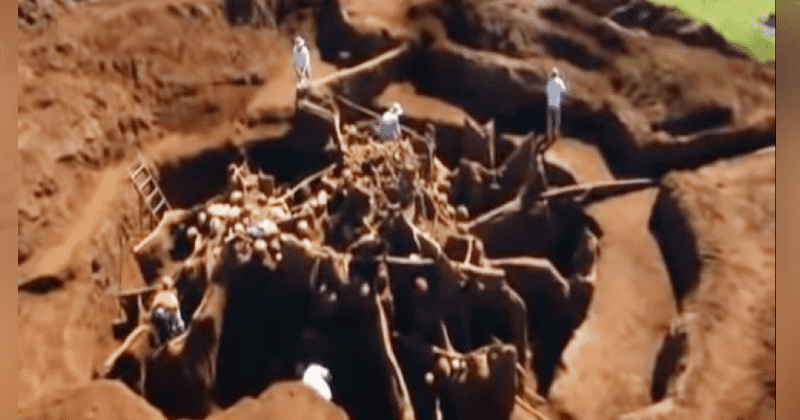
This leafcutter nest in Brazil required removal of 40 tons of dirt. Tons. By ants. Millions of them. The excavation area, once scientists had poured cement into the abandoned nest and let it harden, covered 500 square feet and went down 26 feet. The city had ventilations, "gardens" for growing edible fungus on collected leaves, garbage dumps, and, of course, a royal chamber. 

The city, excavated. Realize these are humans walking around in a city built by ants (YouTube, educational use claimed) 

My favorite bit in this article is biologist Joe Parker's explanation of whether and how the ants know what they're doing: a "behavioral algorithm." He says, "That algorithm does not exist within a single ant. It's this emergent colony behavior of all these workers acting like a superorganism. How that behavioral program is spread across the tiny brains of all these ants is a wonder of the natural world we have no explanation for."

Amazing. 

Wednesday, October 26, 2022

UFOs A Bit of History

UFOs are a hot topic right now. Is there anything to them except errors by people and equipment? I don't know. The new NASA panel looks like a pretty solid group of scientists, and Department of Defense is interested again. Arguably, with new hypersonic, suborbital, orbital, and energy weapons, it's vital for DoD to take a good look whether aliens exist or not.  

But they are not a new topic. Here are some of my notes. 

The U.S. armed services have been concerned, at least off and on, with UFOs since World War II. Pilots over Europe reported glowing fireballs or torpedo shapes following them. These, dubbed "foo fighters," sometimes maneuvered around the planes but did not attack (except in some wild rumors). They were widely believed to be some kind of advanced German surveillance device.
Not long after the war, the first wave of modern UFO interest started with private pilot Kenneth Arnold's report of nine shiny flying craft near Mount Rainier. (He said they MOVED like saucers skipping across water, the term the press picked up: he thought they were crescent-shaped).
That same year came the worst press release of all time, an Army Air Force claim to have recovered alien craft at Roswell, NM. Subsequent clarification that these were parts of high-altitude balloons only sparked dire warnings of a coverup. Annie Jacobsen's book Area 51 got national publicity in 2011 with an unproven and utterly absurd claim we discovered a Soviet craft crewed by deformed children from a Stalinist experiment.

UFO Photo from McMinnville, Oregon, in 1950 (public domain)

The late 1940s through the 1950s were, for UFOs, simply out of this world. There were hundreds of sightings (or many more, depending on who's counting). Some were by military or airline pilots, and the descriptions varied greatly, from saucers to triangles to zeppelin-like. A friend of my father's, flying over Japan during the occupation, reported chasing a translucent circular craft that outdistanced him. A famous early event concerned Captain Thomas Mantell, who died in 1948 while chasing a UFO over Ohio. An investigation concluded Mantell was chasing a then-secret Skyhook balloon, far above the reach of his F-51, and became so consumed by the chase he flew too high and passed out from lack of oxygen.
There was a flood of magazines, newspaper reports, conventions, serious scientific discussions, and pressures on the military, which seemingly did not know what to do with the subject and often ridiculed it. Still, some military leaders worried about advanced Soviet or alien craft, and there was a 1950 directive requiring reporting of unusual objects including missiles, aircraft, meteors, and UFOs. I don't know about what's in force now.
There were "contactees" who claimed aliens of many descriptions had talked to them. They became celebrities. I met one of the original contactees by chance in 1976. He was a nice, normal fellow, long out of "the business:" I was well read on the subject, but I would not have connected him with the contactee of the same name except that he had his old paperbacks on display.
Eminences like Dr. Hermann Oberth, mentor to Wernher von Braun, spoke up: "Of course UFOs are real, and they are interplanetary." (Pravda, on the other hand, told Soviet citizens that reporting UFOs was promoting Western propaganda.) In the 1960s and ever after there were claims astronauts had sighted UFOs. Skeptic James Oberg, originally a NASA engineer and then a highly respected freelance writer, tracked these down relentlessly and found they were of other spacecraft or debris the astronauts were initially puzzled about. NASA as a whole stayed out of the UFO business as much as possible.
The Air Force at one point in the 1950s made, then canceled a plan to put cameras in the noses of F-94 fighters kept on alert. There were a couple of reported cases of military pilots firing on UFOs, to no effect - not surprising, since the objects were likely balloons or astronomical objects. A missile officer once told me of his Alternate Command Post aircraft crew being seriously freaked out by a color-changing UFO that kept pace with them for over half an hour. The navigator finally concluded they were seeing Venus through a bit of atmospheric haze.
Speaking of missiles, there were and are claims of UFOs monkeying with missile command and control. As a former Air Force missile officer, I sympathize given the ability of these systems to throw up unexpected and strange combinations of warning lights, etc. but the aliens must have been able to manipulate encoded devices through buried and shielded cables without leaving a trace, and without any apparent point to it.
The Air Force created Project Blue Book, which ran from 1952 to 1959. It's been debated how serious Blue Book was about really digging for facts, given that the staff was as low as two men and the funding was insignificant. Blue Book DID classify a couple of dozen sightings as "unexplained." A contracted once-and-for-all study in 1968, the Condon report (The Scientific Study of Unidentified Flying Objects), almost entirely dismissed the topic, although some of the explanations were reaches (e.g., an airliner's report of a large "ship" which smaller craft apparently entered or merged with was considered "an atmospheric phenomenon on so rare it has never been reported before or since." Well, maybe.)
The military happily washed its hands of the business and considered it over and done with.
As we know, they were dead wrong.

Some classic books of the early years include my favorite, astronomer J. Allen Hynek's 1972 The UFO Experience. Captain Ed Ruppelt's book on his years with Project Blue Book is still available, as is the Condon Report in paperback form. Psychiatrist Carl Jung (!) wrote a unique book, UFOs: A Modern Myth of Things Seen in the Sky, about 1969 (not sure when the first edition was), and Paris Flammonde wrote an excellent 1971 book, The Age of Flying Saucers, which put the topic up to that date in sociological context, which of course included Cold War fears. There are hundreds of others, and new ones are coming out like shooting stars.

Monday, October 24, 2022

New Undersea Ecosystem: The Trapping Zone

 The newly-discovered Trapping Zone is a strange place. 500 meters down on the underwater slopes of the Maldives, small organisms gather in huge clouds, apparently trapped by the terrain.  Tuna, sharks, and a host of other predators concentrate on them here. Scientists think there must be similar zones elsewhere in the seas, and it's a rich area for research.  Let's hope the government protects them so they are not also rich areas for fishing in an ocean where so much has been depleted.  


seccycat.org. Educational use claimed.


Monday, October 17, 2022

An Idea Too Far: The Orion spaceship

Many space programs have been proposed and canceled since the Space Age began 65 years ago.  None was more visionary - and probably more impossible - than Orion. 

The idea of Orion came out of the national laboratory at Los Alamos in 1957, caught on with the Advanced Research Projects Agency (ARPA), and was backed by the Air Force for several years.  General Atomics, a division of General Dynamics, also spent its own funds on the project, attracting leading physicist Freeman J. Dyson to assist with the design work.  Dyson predicted that “huge projects and whole empires” would come out of Orion.  Someone at ARPA must have thought so too, since the agency in 1958 put an initial $1M on contract to study the idea.

The basic concept was a spacecraft shaped like a short, squat artillery shell with a huge pusher plate and shock absorbers on the aft end.  The scale was enormous: the pusher plate alone would weigh 1,000 tons.  A magazine carrying hundreds of nuclear fission devices of yields up to five kilotons would spit them out into the center of the plate, where they would be ignited, vaporizing the propellant (which could be any inert matter available cheaply in large quantities, even such mundane items as ice or dirt).    Engineers estimated they could get up to 70% of the energy of the explosion converted into thrust against the pusher plate.  For versions with people aboard, crews of up to 150 people were considered.  The specific impulse (a measure of a rocket’s efficiency, abbreviated as Isp and stated in seconds) was estimated at anywhere from 2,000 (over five times what the best chemically-fueled engines could offer) to 50,000, depending on the design of the vehicle and the yield of the nuclear explosives.

Orion never got further than flying a three-foot-diameter model propelled by chemical explosives.  The unknowns confronting the project, as well as its potential costs, were staggering.  For a while in 1959, it was the only major space project left in ARPA after NASA had taken over civilian spaceflight and the military missions had been handed back to the Services.  At that point, no one outside ARPA wanted Orion.

In 1959, the Air Force took another look. Some Air Force officers liked the idea of putting our strategic deterrent on a space platform, out of range of any Soviet weapons.  One illustration showed no fewer than 500 ICBM warheads being dispensed by an Orion ship. 

At the Special Projects Office of the Air Force Special Weapons Center at Kirtland AFB, the overseer of the Orion contract was an Air Force officer and physicist named Lew Allen, later to become Air Force Chief of Staff.  In the late 1950s, the world had not yet grasped how dangerous atmospheric nuclear explosions were.  

In 1959, Air Force officers and physicists produced a study called “Military Implications of the Orion Vehicle.” It examined what, assuming the propulsion technology worked out, Orion-type ships could do for DoD in LEO, geosynchronous orbit (GEO), and deep space.  It was briefed to military audiences including the Air Staff, and a highly receptive General Thomas Power, then Commander in Chief, Strategic Air Command (CINCSAC). 

General Power was a solid believer in the importance of space to future Air Force plans.  He signed off on SAC Qualitative Operational Requirements (QORs) titled, “Strategic Aerospace Vehicle,” “Strategic Earth Orbital Base,” and “Strategic Space Command Post.” The concept of space-based nuclear deterrence was so intriguing that Power declared, “Whoever controls Orion controls the world."


Orion (image NASA)

In those days, what SAC wanted mattered a lot.  In the years before SLBMs and ICBMs arrived in significant numbers, SAC’s bombers made up the huge majority of the American nuclear deterrent.  In some years under Ike, SAC received over 40% of the US defense budget.  Power got Air Force funds to ensure continuation of Orion design studies, with the intent of launching a hardware R&D program when the design work was sufficiently mature.

When President Kennedy took office, though, his Defense Secretary, Robert McNamara, took a strongly negative view of Orion.  He limited its funding to studies only. 

There were plenty of reasons to be wary of Orion, even though the physics looked workable.  An Orion spaceship would take off from a pit on the Earth’s surface using small nuclear bombs all the way up through the atmosphere.  Even some officers who liked the idea of Orion eventually became wary of the fallout, literally and figuratively, of testing such a system in the United States.   With the October 1963 signing of the Limited Test Ban Treaty, prohibiting “any nuclear weapon test explosion, or any other nuclear explosion” in the atmosphere and space, Orion became all the more problematical.  

A late version of the idea was to put a scaled-down Orion on top of a Saturn V booster, lofting it into space without any nuclear explosions (although still with many nuclear devices on board.)  This spacecraft would have weighed about 100 tons and would join with a separately launched crew vehicle in orbit.  Orion briefings attracted some interest from Wernher von Braun, but, in December 1964, NASA notified the Air Force it was staying with chemical rockets.

The Air Force was unwilling to fight for Orion by itself, and the project quickly died.  About $11M had been spent.  Nuclear pulse propulsion, using either fission bombs like Orion or cleaner fusion bombs, has been studied several times since, but without attracting any significant military or NASA support.  Orion, while it still has a few believers today, was consigned to the dust bin of intriguing but ultimately impractical space programs.