Sunday, October 13, 2019

Some amazing art of Dunkleosteus and company

Prehistoric art is a fascinating topic.  Artists apply an enormous range of styles. materials, and knowledge to depict creatures we can't see in the flesh. Some try to get every detail down in a photorealistic approach: others turn up the "vividness" dial with an eye-grabbing palette to emphasize how amazing these animals were. 
Joe Winans is in the latter school, and his results are wonderful.  He does modern animals and other topics too, but his work on prehistoric types, especially (to me) Dunkleosteus, is breathtaking. Joe notes the Dunk work was done under the supervision of one of the real experts on this creature, Dr. Michael Williams of the Cleveland Museum of Natural History.  The animal's form looks pretty realistic to me: I think he has the always-problematical tail just right.  

See his work on Etsy here

And here's what I mean: a pastel drawing of an awesome creature.  (copyright Joe Winans: reproduced by permission.) 

Friday, October 11, 2019

Alexei Leonov, Explorer and artist

Farewell to the first man to walk in space, a two-time cosmonaut, the designated first moonwalker in  the eventually-canceled Soviet effort to land on the Moon, and an artist who spent much of his life trying to convey what he experienced.  I have this litho, thanks to co-author Erika Maurer from The First Space Race. Godspeed, Alexei.


Saturday, October 05, 2019

Seals we no longer see


Mammals have invaded the sea many times. (Interestingly, this never worked the other way: no pure sea mammal has evolved into a land-dweller.)  Mostly, they've been successful.

 The sea otters made themselves at home on seas, shores, and in kelp forests, and the sea mink was doing fine until humans exterminated it for the “mink” part. The sirenians, the manatees and dugongs, are threatened but not yet critical, unless you count Steller's sea cow, which lasted only a few decades after humans found it.  The cetaceans have produced some 90 living species, with one definite human-caused extinction (China’s baji dolphin), and one species reduced to a dozen animals or fewer (the vaquita, of which I’ve written elsewhere). 
The pinnipeds - the seals and sea lions – were mostly doing all right about a century ago despite longtime hunting of some species. The Guadalupe fur seal was even declared extinct twice and refused to leave the stage: it’s rebounding and well protected today.  It’s been suggested in a few papers and articles that we don’t know all the pinniped species yet, and cryptozoologists have many times hypothesized a long-necked seal as the cause of “sea serpent” stories.  (I once had some hope for this myself, but no longer think it plausible.)


What brings all this to mind? Just over 11 years ago, though, the Caribbean monk seal was declared extinct.
Monachus tropicalis survived the first pinniped driven extinct by humans, the Japanese sea lion (Zalophus japonicus), by a few decades. This species became commercially extinct in the late 1940s after decades of uncontrolled hunting in its range in and around the Sea of Japan to harvest skins, oil, and other parts. Its demise was likely assisted by fishermen who, like many fishermen around the world in those days, shot their “competitors” whenever the chance arose.   The animal may have been eliminated as early as 1951, although it seems to have lingered into the 1970s, and a few unconfirmed sightings occurred in the mid-80s.  That was it. A search announced by South Korea in 2007 produced nothing, An International Union for the Conservation of Nature (IUCN) Red List re-assessment in 2014 agreed with the consensus of extinction.     
The monk seal was the only pinniped endemic to the Caribbean, and the first New World mammal recorded by Christopher Columbus.  Columbus’ men killed eight of the abundant, large (up to 200 kg or more), curious animals they called “sea wolves.”   Unfortunately, other humans found them vulnerable too.  (Homo sapiens is not coming off well in this article.)
In 1911, the last large colony – about 200 seals on islands off Yucatan – was slaughtered.  A lone individual was killed near Key West, Florida, in 1933.  A small group of seals on islands off Jamaica was observed until the early 1950s, but vanished.  Except for scattered individual sightings, that was it, seemingly. The U.S. government, for one, lists no confirmed sightings after 1952.
In 1997, the last major survey effort was carried out. It offered some renewed hope. When 93 Haitian and Jamaican fishermen were interviewed about marine mammals, 21 included the monk seal, and 16 said they’d seen one within the last two years. 
Since then, however, there’s been nothing. The U.S. dropped it from the Endangered Species List in 2008 due to extinction. It’s been suggested some reports of Caribbean monk seals could be caused by California sea lions (Zalophus califonianus) from oceanic parks along Florida’s Gulf Coast. California sea lions are normally darker than monk seals, but their size ranges overlap, and the two could certainly be confused at a distance.  Some sightings may involve wayward members of other species.  In my first book (1996), I wrote hopefully of the Caribbean monk seal’s chances for survival.  In my second book (2006), I was still hopeful. But I’m convinced now it’s gone. In 2019, the expeditions have ended; the conservationists have long gone on to other species they can still save; the scientists, priests of knowledge, have written their obituaries.  The best way to honor this seal’s passing is to save its fellow marine mammals - while we still can. 


 References
Adam, Peter, and Gabriela Garcia. 2003. “New information on the natural history, distribution, and skull size of the extinct (?) West Indian Monk Seal, Monachus tropicalis,” Marine Mammal Science, 19:2, p.297.
Boyd, I.L., and M.P. Stanfield.  1998. “Circumstantial evidence for the presence of monk seals in the West Indies,” Oryx, 32, p.310.
IUCN, “Zalophus japonicus,” https://www.iucnredlist.org/species/41667/113089431, accessed 5 October 2019.
The Monachus Guardian (on-line journal) (2),  http://www.monachus.org/mguard02/02mguard.htm.
Naish, Darren. 2009. “Statistics, seals and sea monsters in the technical literature, Tetrapod Zoology blog, https://scienceblogs.com/tetrapodzoology/2009/03/statistics_seals_sea_monsters.php.
Rice, Dale. 1998.  Marine Mammals of the World.  Lawrence, KS: The Society for Marine Mammalogy.
Swanson, Gail.  2000. “Final Millennium for the Caribbean Monk Seal,” The Monachus Guardian 3(1), http://www.monachus.org/mguard05/05infocu.htm.
Walters, Mark.  1997. “Ghost of a Monk Seal,” Animals, November/December, p.23.
Seal image found Simithsonian.org, believed out of copyright

Thursday, September 26, 2019

"Sea of Shadows" coming to TV

The urgent, compelling documentary Sea of Shadows, on the last-ditch fight to save the vaquita porpoise, moves from theaters to National Geographic TV on November 9. Don't miss it.  

Appalling Disrespect for Written History - Redstone Library Closing -UPDATE!

Libraries of all kinds, all over the country, are cutting back their physical collections because of the absurd idea everything important is online. It's appalling, though, to see a library whose parent organization knows the physical collection is irreplaceable, indispensable, and one of a kind to go that way.
The research library at Redstone Arsenal, where 60 years of space history and knowledge are archived, is vanishing, to be replaced with online access to a fraction of the materials.
I have no words, except for short one-syllable types I try to avoid using in this blog.  I hope there is some chance US Space Command, the Air Force Academy, NASA Marshall Space Flight Center, or SOMEONE will step in and preserve this.

UPDATE! I talked to the hsitory office at Air Froce Space Command, which has offered to take the entire collection.  Dr.Sturdevant there contacted his Army counterpart, who assured huim the Army had decided not to turn the physical records over to disposal: they will be maintained for up to a year until the Army decides whether to open a branch library, send it all to AFSPC (which currently has the History responsibility for the new US Space Command) , or find some other solution.

Friday, September 20, 2019

Shooting a rocket from Mars

Returning a sample of Martian soil has been seriously discussed at least since the Viking landers in the 70s.  But there's no really simple way to solve it.  Landing a rocket on Mars big enough to take a sample directly back to Earth means shipping a lot of mass to Mars, which by one estmate costs a good $1M per kilogram. Doing it any other way means a rendezvous in Martian orbit.  That's where NASA is headed now: the Mars 2020 rover will collect and study samples and take them to a surface point where another spacecraft (not yet built) with a rocket will land, and then the rocket lofts the samples or dock with an orbiter and send them to Earth.  (It's almost enough to make you think it's easier to just send astronauts, although that option still seems far off at out current rate of progress.)   There are a host of challenges here, and this article is a good introduction. (image NASA)
NASA rocket

Thursday, September 19, 2019

Happy 30th birthday to Space News

"On Sept. 18, 1989, SpaceNews published the first of four monthly preview issues to test the waters for a trade publication focused exclusively on space..."


It turned out there was definitely room for a weekly newspaper (now a monthly magazine in a hard copy, although daily online) to cover the space community - military, civil, commercial, technology, government, and all the rest.  It's done a  terrific job of ceverage, remained balanced, and even quoted me and printed a couple of op-eds from me (how classy can you get)?  They've kept it pretty nonpartisan in anindustry which has ferocious partisans (put the ULA fans and the SpaceX fans in a paintball game, and its possible no one will come out alive) and open to all points of view.

I've had sucsriptions whenever I could afford them and kept up online, via work, etc. whenever I couldn't.  They do special issues for the Space Symposium and the Conference on Small Satellites, other special events, and did a good job on the Apollo 11 anniversary, although they normally leave history to other publications, like QUEST (which also publishes me now and then).  

Happy birthday, and keep doing a great job!
  

Japan's wolf: Almost forgotten, but not gone?

A howl recorded in Japan has renewed interest in the Japanese wolf, believed exticnt as early as 1905.  Some researchers have never lost hope.  There is no recording of its howl, although it was universally reported to be amazingly loud for an animal that was less that 40 cm at the shoulder: indeed,the animal was known as "the Howling God." (One might say the country famous for the subcompact car also produced the subcompact wolf.)
Now a howl identified byexperts as slightly higher-pitched than that of a timber wolf and matching  no other animal known in Japan has enthusiasts excited again.  A television documentary featuring that sound and modern sightings, which include some photographs, is in work in Japan.  
Are there nights when, on Japan's loneliest mountaintops, the Howling God still speaks? 

Saturday, September 14, 2019

Vaquita still hanging on

The vaquita porpoise is easily the most endangered marine mammal on Earth. The smallest of the porpoises, the chunky little cetacean with black rings around its eyes was nicknamed "little cow" by local fishermen in Gulf of California a long time ago.  Now a lot of fishermen (though certainly not all) nickname it something a lot harsher and wish it would vanish so they could poach totoaba fish, whose bladders are worth tens of thousands of dollars each. (To be fair, even fishermen who want to catch something else are under the gun, literally, from drug smugglers - the bladders are worth as much as the drugs.)
Extinction is almost here. The estimates of numbers have been down as low as 12, which isn't a viable population in the wild even under perfect conditions. I wouldn't have been surprised at all if it hit 0 this year.
And yet, the species has been hanging on, just barely. Every sighting is cherished and every calf is cause for a champagne celebration among conservationists, so an expedition sighting 6 animals was very good news.  The latest estimate of 30 offers, if not celebration, at least hope.

Friday, September 06, 2019

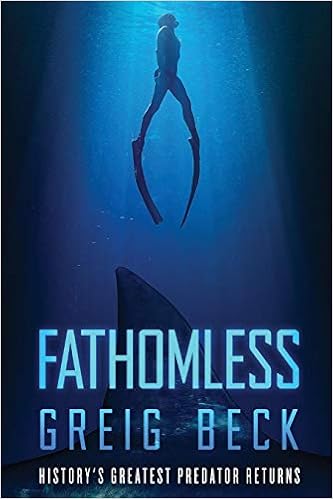
Fiction Review: Fathomless


by Greig Beck, 2016 edition (paperback)

The Megalodon shark pretty much deserves its own shelf in the fiction aisle at Barnes Noble.  From its mention in Jaws to a raft of novels to its appearance in Meg and a couple of terrible faked “documentaries,” the big lug has been popular for a long time.

That make it harder to write original Meg novels, although authors like Briar Lee Mitchell (Big Ass Shark) have pulled it off to stand out from the dreck of hundreds of self-published novels by people who have never seen a shark (or an editor).  Now Grieg Beck, master of the lost-world novel, has turned his attention to the supershark, hanging out in a subterranean Alaskan sea. While most authors zoom past the “how did it survive” question with impossible or rushed-through scenarios, Beck expands that part to give our heroes not one great adventure, but two. The obligatory showdown on the open sea is here, but man, did these characters go through a lot to get there!
I can nitpick the science (e.g., Meg was not closely related to the modern Great White, and “sharks don’t get cancer” is an ad slogan, and a false one.). The adventurers need many happy coincides to survive, but this is a thriller, and everyone needs a few of those moments.  Questionably accurate Meg behavior can be glossed over because the animals had had millions of years to evolve, although I hated the “this one fish will destroy all commerce in the Pacific Ocean” thought when it came up in Steve Alten’s Meg, and I’m not a fan of seeing it again here.  Countering that, any book that slips Dunkleosteus in for a cameo is fine by me.
Beck’s characters are interesting, three dimensional, and generally act in character. Kudos to Beck for a cast you can believe in, plus a stunt early on making you miss-guess who a particular villain is (I won’t spoil it).   
Do I believe this could happen? No. The undersea ecosystem has too many big animals and no source of outside energy (like sunlight or really massive thermal vent colonies) to make it keep going.   But is it entertaining? Hell, yes. This is a great book for someone who wants to spend a few evenings reading of brave American scientists, mysterious Russians, a deadly monstrosity, some exotic marine life, a cool high-tech minsub, and a geology lesson to boot.  

Saturday, August 31, 2019

Newest whale species described

In 2016, as I reported in this post, a beaked whale stranded on the cost of Alaska was determined to be a likely new species.  It now becomes the third whale formally described from its genus. Leading U.S. cetologist James G. Mead and several colleagues from Japan wrote the description.  Berardius minimus is distinguished from its cousins by "...remarkably smaller body size of physically mature individuals, proportionately shorter beak, darker body colour…" 
Japanese whalers and fishermen knew of the smaller, darker beaked whalefor a long time and had their own name for it, “kuro-tsuchi." A specimen 6.2m was stranded in Hokkaido in 2012 but was misidentified as an existing species. Indeed, the scientists who wrote the description used "three individuals from Hokkaido and one additional individual from the United States National Museum of Natural History collection."   
The whale's big leap into recognition began when a stranded specimen in Alaska's Prilobof Islands was seen by a biology teacher, who thought it was significant and called a seal researcher he knew, She in turn decided it was significant, not to mention odd, and called n a cetologist, and it went on from there, through the long, hard work of comparing it to identified and unidentified skeletal material and testing its DNA.   So this case is a good reminder that "collected" doesn't always mean "classified," and "identified as a new species" takes a while to become "described." 
This makes 22 species in the enigmatic group known as the beaked whales, and no one can be sure we know them all.  
Photograph from 2016 by Karin Holser, who helped identify the species in the field: I believe this is educational / scientific "fair use." I emailed Holser about it but did not hear back. Note the specimen had been stranded long enough that its characteristic dark coloration has faded, although Mead et. al. note the color is not 100 percent distinguishing from Berardius bairdii, whose range it overlaps.

Tuesday, August 27, 2019

Small Problem With Bigfoot Sign

In the local newspaper, the Colorado Springs Gazette, a guest column appeared the other day from Barry Fagin, a Senior Fellow at the Independence Institute in Denver and a prominent skeptic.  He argued the "Bigfoot Crossing" sign on the Pikes Peak Highway is an embarrassment that makes us look like idiots and spreads pseudoscience.  Here's his column.   
I see his point.  I've spent a lot of time looking into Bigfoot over the years, and I went into it at length in my second book on zoology/cryptozoology., Shadows of Existence. My judgment is that the species does not exist: we've gone too long without bones or other hard evidence, or even DNA.  And the non-existence of the fossil record for any higher primates in the Americas is pretty hard to get around.  I've talked to smart, sane, sober people who are certain they have seen Bigfoot. I don't know what they saw, but I still think mistakes are more likely than apes.  (Yes, I was trying for a rhyme there between "mistake" and "ape," but I can't make it work.)  
Still, I would give the ape a break. Government agencies very rarely display a sense of humor, and I applaud it when they do. The sign warns people of a creature that likely isn't there, but I don't see the harm. There are "cryptid" signs and statues all over the country, some, like this one, on public property. Lake Champlain, to give just one example, has made a major tourist attraction of their local critter.  No one's trying to vote their selectmen, or whatever they have, out of office for supporting it, even if lake biologists are pretty much 100 percent on the side of "There ain't no such animal."  (In case you are curious, I once asked the local branch of Colorado Parks and Wildlife Agency whether they take Bigfoot reports (yes) and whether they do anything with them (no).  
As to the scientific aspects, one can in fact make a science lesson out of an animal that isn't there. Getting students interested in working out the food supply and habitat needs of a hypothetical ape could interest those who might not get excited over Preble's jumping mouse and hopefully spark interest in conservation science.  
So let the big guy have his sign. It's a bit of local color and kinda cool.  


Photo from City of Colorado Springs website


Dunkleosteus: A Little Rubber Toy from Japan

Since I review every Dunkleosteus toy and model I can find, here's a toy from Japan, manufacturer uncertain, bought from a Hong King seller on eBay.  As a toy, it gets points for being rubber instead of plastic: as an accurate Dunk representation... well, it's toy. You don't expect a lot.  It's kind of cute despite the mouth.


Saturday, August 10, 2019

Small Satellites Finally Gain Respect

Small satellites and microsatellites (the spacecraft, not the genetic term) have moved into the mainstream.  After decades of being dismisses as toys or R&D vehicles, satellites under 500kg (small) and 100kg (micro) and 10kg (nano) are launching in the thousands. That's not an exaggeration. See this piece from Space News predicting 8,500 satellites in this decade.
Just from the Conference on Small Satellites this year, we have new on military CubeSats (1 kg cubes) remote sensing / geospatial data advances (trust me a small radar satellite resolving details under 1 meter in diameter is incredible), ups and downs in the launch industry (SpaceX is making more room for affordable secondary payloads on its large rockets, while small launch firm Vector seems to have gone belly-up). 
I hate it when a smallsat launcher company fails, because the staffs are so full of enthusiasm and often work crazy hours for peanuts to try to reach space, but there are way too many competitors for the available launches right now (a couple of years from now, when even more smallsats are on orbit and start needing replacement, it may look quite different.) Vector has two ordered launches on the books, and I hope it can scrape through under new CEO John Garvey, a veteran of this chancy business.  Much depends on whether future birds and their replacements are put up singly or in small bunches vs. in wholesale lots from large rockets. Speakign of large rockets, NASA has opened up Cubesat slots on the second launch of their giant SLS booster.


SLS payload manager Renee Cox shows a model of the accommodations (NASA)

There's a great deal of buzz in the smallsat world about the new Space Development Agency and its focus on multipurpose layers of smallsats (an interesting papaer prefiguring this notion is found here), while commercial firms like Planet and Spire launch nanosatellites that blanket the Earth to collect imagery, weather, and other information.

A space agency used to be a giant government organization. Now data-producing satellites can be built by high schoolers and launched for as little as $100K, and a student in Myanmar with an internet connection can download umpteen megabits of images and measurements. No one knows where all this is leading, but it's going to be exciting. 

Wednesday, August 07, 2019

"Polly want a cracker... NOW!"

Parrots the size of toddlers are weird to visualize.  Looking at images of this newly found extinct species is a little like seeing a Komodo dragon and not being able to process a lizard the size of an alligator.  Living in New Zealand 16 million years ago, the species dubbed Heracles inexpectatus stood a meter tall and weighed almost 7kg. The bird was probably ground-dwelling or perhaps a very limited flyer, but it was a beast to be reckoned with for other birds and ground-dwelling animals smaller than itself. One scientist observed, "This was Squawkzilla."

Friday, August 02, 2019

Naish on Shuker's Encyclopedia of New and Rediscovered Animals (Note on an important review)

It's a little odd to make a blog post just to point to someone else's review of someone else's book, but Dr. Darren Naish's very thorough review of an amazing book by Dr. Karl Shuker deserves it. Plus, I get mentioned.  Darren also noted something I'd been wondering about: a report from Brazil of a catfish that had taken to a land-based existence, mentioned in Shuker's earlier work and cited by me in Rumors of Existence. I know, it's all getting kind of circular, but the point I wanted to quote here was "The incredible semi-terrestrial catfish discovered in Manaus by Peter Henderson still has yet to be formally described..."  I believe it still hasn't.  A shame.  

Here's the actual topic, Karl's Encyclopedia of New and Rediscovered Animals.

And here's my review of that. 
(Please pardon some formatting problems, I'll be back to fix those.)

Building on two of Shuker's earlier works, The Lost Ark and The New Zoo, 
the Encyclopedia  deserves its title. This is a mammoth collection of scientific 
achievements from 1900 to the present. 
It's information-packed, sumptuously illustrated, and just plain fun.
Shuker does not, of course, try to include all discoveries, since the 
beetles alone would merit a  library. He goes for creatures which are 
relatively large or scientifically important, and those are 
more than sufficient to fill this large-format 368-page book. S
huker is a highly knowledgeable writer  (as you'd expect from a Ph.D. 
who's been poking into the odd corners of zoology for four decades). 
He discusses both species and important subspecies (including those 
where there is some dispute  about taxonomy: it's not clear whether 
Rothschild's giraffe is a subspecies, species, or just a local variation.) 
The zoologically inclined reader will enjoy every page of this romp 
through monk seals,  giant stick insects, megamouth sharks, monitor 
lizards, and other discoveries simply too numerous to mention.
One thing Shuker does not do is set all the material into a context by 
showing any species  discovery curves or discussing just how many 
ew vs. known species are being found. He does,  though, amply 
demonstrate his main theme: that discovery didn't end with the "golden 
age"  of the 1800s - indeed, it's continued at a steady and often 
surprising pace right up to the present day.

Being a Shuker work, this book has plenty of mysteries along with 
the definite discoveries.  Some are well-known: some, like a slow loris 
with a thick bushy tail, not yet recognized although  it's been held in captivity
 and photographed, surprised even a well-read aficionado like myself. 
Likewise, some of the stories of discovery, like the coelacanth's, have 
been told many times  (though Shuker always tells them well), but how 
many know the tragic tale behind the discovery of Flecker's sea wasp 
jellyfish, or how Rudie Kuiter saw a flounder swimming along and discovered 
it was the most amazing mimic in nature: an octopus pretending to be a 
flounder? Shuker also includes stories of animals which didn't quite 
live up to their hype as new species,  like Mexico's onza (not a new 
species of big cat, just an odd puma.) He closes with a few words 
on possible future discoveries, a note on taxonomy, and a bibliography 
running 33 pages.There are hundreds of images here to go with the text, 
ranging from photos to Bill Rebsamen's  wonderful color illustrations.
This is one of the classic books, not just of cryptozoology 
but of modern zoology and  conservation biology. Readers will love it 
enough to revisit it many times. 
It's a great achievement.

December 16, 2012

Saturday, July 27, 2019

A new (and amazing) look at Dunkleosteus

All we know for sure about Dunkleosteus terrelli comes from its fossilized skull and armor.  The rest is inferred from smaller placoderms of which we have full impression fossils, notably Coccosteus, a fish that (with all respect to actual paleontologists and paleoicthyologists) I'm getting tired of hearing about because you can't take a half-meter fish and blow it up to eight meters (and roughly 4,096 times the mass) and not introduce some formidable error bars.  Yes, I know,it's the best we have. 
However, a recent paper introduces some fascinating new data. From a Cleveland Shale specimen found in 2008 and recently re-imaged with the newest MRI technology, this is a spinal column section with 18 vertebrae. Skeletal cartilage rarely fossilizes, but calcium accumulates throughout the animal's life and sometimes we get lucky (very lucky in this case, since the fossil was a juvenile about three meters long: the conditions had to be perfect to fossilize this so well.) 
I won't repost the images due to copyright, but take a look at the paper here

Friday, July 26, 2019

Shark Week starts with... a pocket shark?

We're headed into Shark Week on Discovery, the week when we alternate between scientists telling us sharks are misunderstood marvels and assorted bite victims and commentators telling us sharks are brutal nasty mankillers who should be wiped out.  One program on offer in sampling the website announcements is The Lost Shark - Extinct or Alive? It will disappoint some people to learn Carcharhinus hemiodon, the shark in question, is a meter long, not some giant, deadly superpredator, but the scientific question is interesting enough.  
ADDED: Fortunately, one of the opening programs is worth watching. Josh Gates and Expedition Unknown explore the facts and myths around everyone's favorite fish monster, Megalodon. EXPEDITION UNKNOWN: MEGALODON airs 28 July at 8PM Eastern time on  Discovery Channel./

Naturally, other channels, notably National Geographic, are running shark programs too.  Getting a head start tonight is HBO, which is showing MegMegalodon is extinct, of course, but that's no barrier to having silly fun with it in fiction. 

We are still discovering new species of shark. Most are small, and some are hard to call a shark with a straight face, except in the scientific sense. The American pocket shark is smaller than a dollar bill and has a squarish head that makes it look kind of cute, like a toy sperm whale with extra fins. This species, like the only other "pocket shark" (named for a pocket-like feature near the pectoral fins, not because Paris Hilton carries one in a waterproof purse or something), a Pacific specimen, is known from only one individual.


The best shark headline of recent years has to belong to the Huffington Post, which announced, "Shark Nearly Chokes to Death On Moose, Is Saved By Canadian Bystanders." Because spotting a 2.8-meter Greenland shark (Somniosus microcephalus, one of the sleeper sharks, which are very big, long-lived and totally weird) choking to death on a chunk of moose and rescuing it is very much a Canadian thing to do. Maybe it’s the MOST Canadian thing you can do, except maybe offering the shark maple syrup to go with dinner. 
Image result for greenland shark
Greenland shark, Smithsonian photo
  

Saturday, July 20, 2019

50 Years ago today: Good Night, Moon

I did a presentation to an audience at work, with employees of all ages, about the origins of the Space Age and the triumphs and challenges of Apollo 11. (Yes, the younger people still think it's cool I was there.) I brought in the newspapers from that day, and several people brought other memorabilia. I closed with, "Thirty or forty years from now, there won't be any eyewitnesses to Apollo. There'll only be the story. You, and your children, and your grandchildren, will own that story. Tell the story. And write some new ones. It matters."

Congratulations to Buzz and Mike, to Neil as he explores new realms, and to the 400,000 people who supported the Apollo program.


Tuesday, July 16, 2019

50 years ago today...

I was in a small plane with my dad and brother, watching the greatest adventure of humanity begin.  At ten miles (probably the restricted zone is more like 100 miles these days) even a Saturn V doesn't look very big. What I remember most is the intensity of the yellow-orange flame, the way it burned like the heart of a star as the rocket rose and began its roll and its climb out over the sea.  I have looked for old snapshots and I must have been a bit excited, because the ones I took missed the giant rocket and captured only clouds.  That's all right. I remember. Tennessee Williams said all true stories end in death. He was wrong.  This one was a birth. 


Commander Jeffrey Sinclair, Babylon 5:  "Ask ten different scientists about the environment, population control, genetics, and you'll get ten different answers. But there's one thing every scientist on the planet agrees on. Whether it happens in a hundred years or a thousand years or a million years, eventually our Sun will grow cold and go out. When that happens, it won't just take us. It'll take Marilyn Monroe, and Lao-Tzu, and Einstein, and Morobuto, and Buddy Holly, and Aristophanes, and all of this…all of this…was for nothing. Unless we go to the stars."
Footnote:: When is the last time a politician said, "We're going to do this because it's hard?"

Sunday, July 14, 2019

Review: Shoot for the Moon is a great read on space history

Shoot for the Moon: The Space Race and the Extraordinary Voyage of Apollo 11
James Donovan
  • 464 pages
  • Little, Brown and Company, 2019

You might think there is no point in more Apollo books: there are more such books than there are rocks on the moon.  But stories can always be told better.  Robert Kurson's Rocket Men: The Odyssey of Apollo 8 is a good example. This is another.There are several things a good space history must weave together. It must integrate human drama with technical information, political and social context with the skills of engineers and the courage of astronauts.  Also, it must be correct on the countless small details that space aficionados will call "BS" on if any are wrong.  Fortunately, Donovan is up to this task in almost every way.  He gives a brief explanation of how the Space Age began and how it ended up being a race to the moon.  These first two chapters are where my nitpicks lie. Donovan says German rocket work was undertaken to circumvent the Treaty of Versailles, which Michael Neufeld (whom Donovan has read) has shown is incorrect. Von Braun's Jupiter-C was never a missile, and the Atlas wasn't developed to be a booster. Once out of the 1950s, though, Donovan's research is on sounder footing, and his narrative captivating. He accurately sketches the competition between the superpowers and what we knew and didn't know about Soviet problems: it was a bit like a poker game (analogy by my coauthor Erika Maurer), but with the U.S. playing stud poker, cards exposed, while Russia played draw, and Donovan shows how this disparity of information affected the decisions of American leaders.Donovan explains the crew dynamics on the Apollo missions and the personal differences: he writes of the engineering-focused Aldrin, "Small talk was a foreign language to Buzz." He incorporates the drama on the ground and the challenges of the mission controllers and engineers as well as the actions of the famous administrators and astronauts. While some writers reduce Neil Armstrong to a nice guy with good flying skills: Donovan recounts his determination to not only complete the mission but to complete it in accordance with his own judgment, When it comes to the climactic landing, this book puts you in Mission Control and in the Lunar Module, feeling the tension and following the decision processes. You know how it comes out, but you are riveted anyway.


The references and bibliography are extensive, and the quality of the sources is good to excellent. This is a book well worth making room for on your shelf of space histories. 

Saturday, July 06, 2019

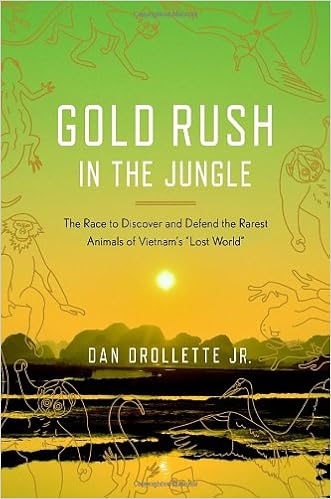
Book Review: Gold Rush in the Jungle


I'm quite embarrassed now that I had this book in the house for a couple of years before I read it. It's amazing and very important. 
The "gold rush" of large mammals in and around the Vu Quang region of Vietnam and Laos in the early 1990s was like nothing zoologists had seen since before World War I.  New species of mammals had become rare (although not as rare as most people think), but the Vu Quang ox or Saola was not just a new species but a new genus and an animal with no close living relatives. It is, easily the largest (100kg) new mammal from all of Eurasia since the Kouprey in 1937.  New deer (belonging to a group of relatively small species, the muntjacs), a mysterious bovid with high-rise horns like motorcycle handlebars, new or rediscovered monkeys, a rediscovered wild pig, the identification of the world's biggest turtle in a shallow, polluted lake in the midst of Hanoi - nothing seemed too outlandish.   


Dan Drollettte Jr. undertook in 1998 his first of several trips into Vietnam, meeting with the Western and Vietnamese scientists and lay researchers trying to identify and protect the remnants of the closest thing the Earth still has to offer to a genuine "lost world." In this book he visits sites from the Hanoi Hilton prison to the Endangered Primate Research Center, trying to understand the modern nation of Vietnam, its culture, and how those factors affect the mixed attitudes toward wildlife.    Some animals draw crowds to see them in preserves or in the wild: others are ruthlessly poached. Some Vietnamese furiously condemn poaching as a destruction of their natural treasures, while others aid poachers for money.  A tiger can be worth 250,000 dollars, which explains why the tiger may well be extinct in the country. And it's not only about money: some elites have an attitude that everything in Vietnam is theirs to eat. Making this all more complex is the lingering damage from Agent Orange and other defoliants, bug killers, and byproducts of war.  
Drollette loves especially Vietnam's endemic species of langur monkeys but also devotes chapters to several unique cases. These include the bizarre discovery of a giant turtle in Hoan Kiem Lake; the kouprey, which some scientists now doubt is a species vs. a hybrid of other cattle, and whose current status in its Cambodian homeland is a mystery: the rediscovered Vietnamese population of the Javan rhinoceros, quickly hunted back into to extinction: and the nguoi rung, the upright ape that has not been proven to exist but is not dismissed - it may be a species of orangutan, or something much stranger. (Drollette notes it's had to dismiss anything in an area that has seen an average of two new species discovered each week for ten years. )    
The author also offers perspectives from world-leading scientists and conservationists about habitat protection vs species protection, zoos vs. original habitats and reserves, and captive breeding. The late Dr. Alan Rabinowitz told Drolette he hated zoos, but when numbers of an animal like the rhino drop into single digits, you have very little choice left: in most cases: it must be brought in. 
In Drollette's recounting of his travels though this fast-modernizing nation, he discusses everything from the status of women to the Vietnamese attitudes toward Americans (generally benign 30+ years after the war: the Vietnamese fought China for a thousand years, and the war with the U.S. was hardly a blip on that timeline) to the country's favorite karaoke song (it's John Denver's "Take Me Home,Country Roads," and he has no idea why.)  
Drollette closes on a cautiously hopeful note. Vietnamese children are now being taught the value of wildlife and the richness of Vietnam's heritage, and a new generation of rangers and scientists is expanding the conservation efforts of the nation.  
A thorough reference section, with a glossary, bibliography, and index round out this indispensable book.

Thursday, July 04, 2019

Checking in on Bigfoot

No one, regardless of beliefs on the subject, can resist checking in on America's real (?) King Kong once in a while. If there's an iconic American monster, Sasquatch is it.  While very few scientists think we have a population of big primates (I thought it possible a long time, ago: I would bet heavily against it now, but I hope I would lose every dime.  (Of course, I could bet my house and the winner would get to deal with my mortgage...)  

Thousands of sightings, countless novels (the best is Eric Penz' Cryptidhere's an interview with the author)  probably dozens of movies and equally fictitious YouTube "documentations," con artists, hoaxers, sincere monster-hunters, cryptozoologists, eyewitnesses, and plain folks have been part  of this business for over 60 years now. 
There's no physical evidence of Bigfoot that has been scientifically verified, but no one doubts the best chance the Big Guy had for widespread recognition was when Roger Patterson and Bob Gimlin filmed Bigfoot or something that certainly looked like it in California in 1967.  Patterson died without ever hinting at a hoax, and Gimlin swears by the tale to this day, but what's actually in the frame? 

I'd bet "suit:" it looks baggier the more versions I see of it, and 52 years without anything remotely as intriguing is too much for me. I don't know who hoaxed who and who might be telling the truth and who might be lying, but I don't like it as an unknown primate. 

This comes up now because of a lot of discussion over a YouTube video where a man signing himself "Bigfoot Al" has used modern software to smooth out the film and give us a better look at our creature. Now, the troujble with enhancing or enlarging this beastie is that it was shot on 16mm film and the image is 1.8mm high. there's a limit to what you can do because there is limited data captured on the film. People get fooled by TV shows where grainy surveillance footage is sharpened up to reveal details like scars that were not on the original footage.)  Anyway, this effort doesn't make it any better for me: indeed, it looks lumpier, less well-defined, and thus more like a suit.    It always bothered a lot of viewers that the bottom of the foot was lighter in color than the rest of the fur or skin, not known to happen with apes: here it's more apparent.   

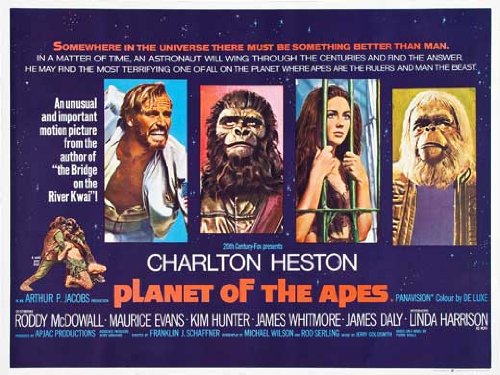
One commenter on a FaceBook thread remarked the PG suit (it it is one) looks better than the suits created by John Chambers for the movie Planet of the Apes, which were the pinnacle of spe-suit wizardry at that time.   That overlooks the facts, though: the Apes suits were filmed with the highest-definition professional cameras and most skillful cameramen available and included close-up shots, all projected on huge screens: of course you could pick out flaws if you looked for them. If you shot one of those suits at the distance of the PG film with a 1967 16mm hand-held and the lens Patterson had, I'm sure it would look at least as convincing, probably a lot more so. That's the experiment I'd like to see: take one of the more distant ape shots from the Planet film and degrade it to what Patterson's camera could pick up at that range, then put it side by side.

Planet of the Apes POSTER Movie (30 x 40 Inches - 77cm x 102cm) (1968) (UK Style A)
Fair use claimed

Id the film definitively, once and for all, disproven? No, because it can't be, unless maybe someone fiunds a picture of a man putting on a suit.  But we are close to it, and in any event that's not where the burden of proof lies.  It looks more to me like a suit in the various enlargements and enhancements, but I can't see a zipper pull (which ,if it existed, would likely be smaller than a spot of emulsion grain and thus undetectable anyway).  


I hope Bigfoot is out there.  And maybe it's best if we never find out. 

Tuesday, July 02, 2019

Movie: Jurassic World: Fallen Scriptwriters

I don't know why I'd waited so long to watch Jurassic World: Fallen Kingdom, but it turns out I didn't miss as much as I thought.' I only watched about an hour, starting with the beginning of reactivating the search function. It's hard to get into it from the beginning, because despite our heroes being partly at fault for countless human deaths, nothing seems to have happened to them, and no one has gone back to the island and nuked it - but Mother Nature has plans...
Kudos to the filmmakers for using more animatronics than last time, and the inclusion of new dinosaur species is nice. The CGI versions of the dinosaurs, though, despite nice attention to details like kicking up dirt and debris as they ran, didn't quite let me turn off my brain and accept them as real. (The state of the current art of giant creatures is, to me, the new Godzilla, where Ghidorah is just amazing.)
Chris Pratt isn't capable of a bad performance, but the other humans didn't give him much help, and neither did the script. To cite just one absurd bit out of many, how is Pratt inches away from advancing lava and the heat doesn't bother him the tiniest bit, let alone bake him? Or set all the vegetation on fire? Or burn the wooden LOG he sheltered behind? It's so obviously CGI'd in that it's painful to watch.
Also, what the heck would you do with a "weaponized dinosaur?" It might be cool and intimidating to keep one around your secret lair (Blofeld would probably have a couple to chase James Bond around), but surely it's cheaper to get a few more henchmen than what is basically a giant guard ostrich needing specialized and costly veterinary services. 
Interesting article here on the dinos, with comments from paleontologists about what is and isn't (mostly isn't) believable.  (Vulcanologists, by the way, were generally not thrilled with the volcano's role in all this, although there are differences of opinion.).
The next one is supposed to brign back our paleontological heroes from the original Jurassic Park.  Now that might be interesting. It might even be good. 

Friday, June 28, 2019

NASA reaches for Titan in daring mission

This is the most excited I've been about a NASA robotic explorer since the Mars Sample Return was canceled (which has happened about three times). The space agency will send a probe to Saturn's moon Titan, but they're not just going to fly by it or orbit it.  They're going to land with a quadcopter to fly to many locations and analyze the moon and its atmosphere with a mass spectrometer. 
This isn't humanity's first visit to the huge, rocky,cold (-179 C) moon. In 2005, the European Space Agency-built Huygens probe separated from NASA's Cassini probe and landed on Titan.  Now we're going back. NASA selected ,as the next mission in its New Frontiers "medium-cost" series, Dragonfly. Arriving in 2034, Dragonfly will make dozens of flights over the moon's land areas and the hydrocarbon "seas" of methane and ethane, looking for signs of subsurface liquid water reservoirs  and - if we are very, very lucky - signs of life. 
Said NASA Associate  Administrator Thomas Zurbuchen, "Titan is unlike any other place in the solar system, and Dragonfly is like no other mission, It's remarkable to think of this rotorcraft flying miles and miles across the organic sand dunes of Saturn's largest moon, ...Dragonfly will visit a world filled with a wide variety of organic compounds, which are the building blocks of life and could teach us about the origin of life itself."  The Principal Investigator will be Elizabeth Turtle of the Johns Hopkins University’s Applied Physics Laboratory (APL.)
Flyers have been proposed for several planetary missions, including several to Mars, but Titan has special appeal, not only for its composition, but for a nitrogen-based atmosphere (like our own)  four times denser than Earth's and thus able to support flight much easier than the very thin atmosphere of Mars.
This is a daring, ambitious, risky mission.  It's the kind of thing NASA was created for.  


An artist's depiction of the Dragonfly spacecraft on the surface of Titan.
Artist's concept of Dragonfly


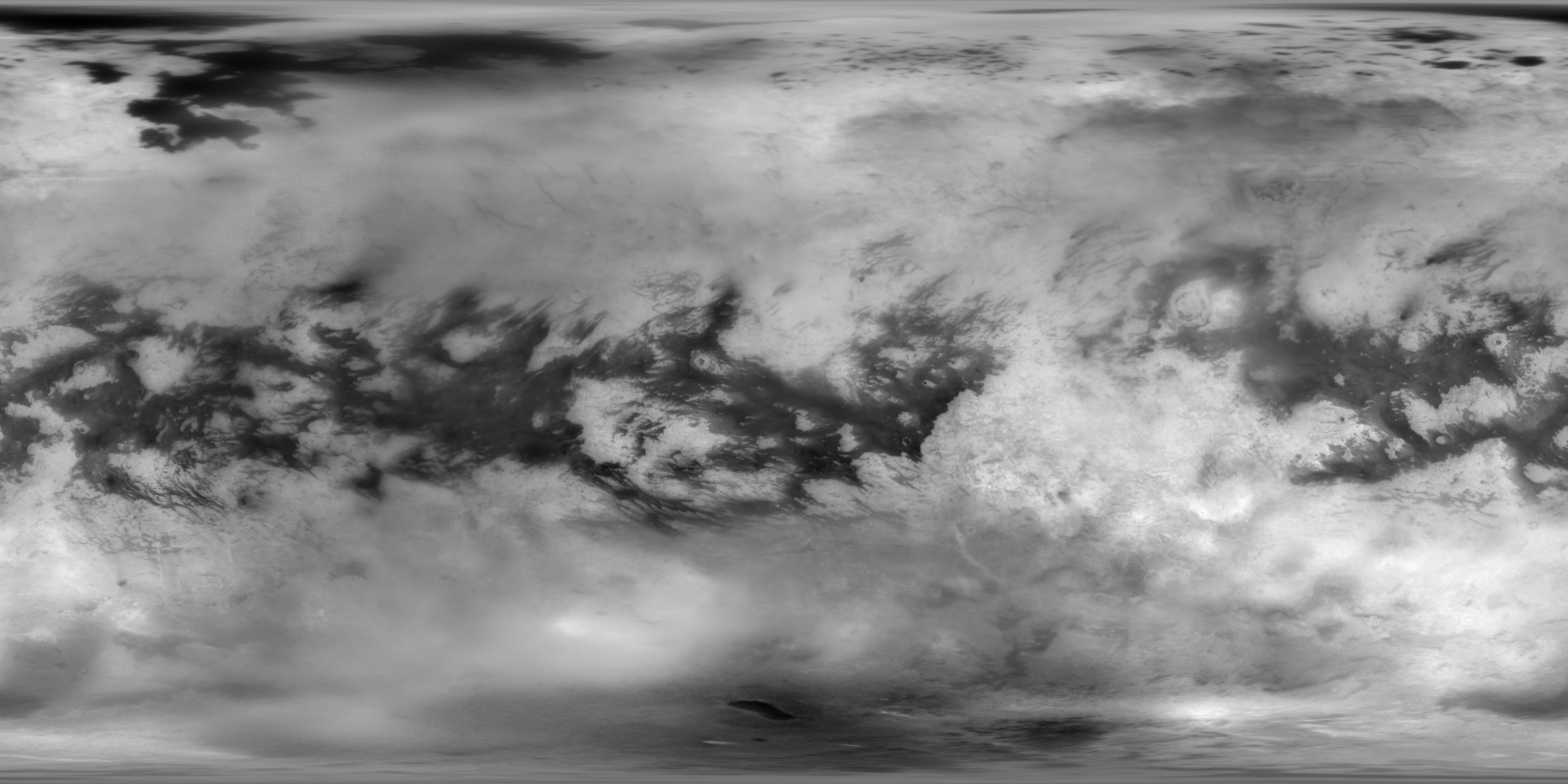
Surface of Titan through atmospheric haze, from the Huygens probe

Good luck to NASA and the Dragonfly proposers at Johns Hopkins APL.  On to Titan!

Monday, June 24, 2019

A Majestic Documentary: Apollo 11

Last night I caught the new documentary Apollo 11 on CNN.  Wow.
Restored from sources including 11,000 hours of audio recordings and a huge cache of 70mm film that went overlooked for decades, it brought the event back vividly to those of us who were around for it - and for those who know it as a term in a history book. 
(One of my kids had a high school "history" textbook that mentioned only "an expensive race to the moon" without the words Apollo, Armstrong, or Aldrin: someone should be able to sue textbook writers for stupidity.  )
The found footage and the things that stitch it together (black and white newsreel type film, astronaut comments, the voice of Walter Cronkite) make a whole that is even more than the sum of its considerable parts.  Many bits stand out as especially meaningful: The size of the Saturn V and its crawler. The suiting-up process, and how everyone was "all business" on the launch morning. The beautiful summer day with countless people gathered to watch. (Note: if you've only seen the launch in the film First Man, director Damien Chazelle thought an overcast launch was more dramatic. He was wrong.) 
Finally, this film gives the viewer at least a small sense of how complex an endeavor this was, and how many thousand things had to go right - and almost all of them did. 
The launch and the Cape looked the way I remembered (I was 9), but more vivid. The footage did not, I regret to say, note a tiny white Piper Cherokee ten miles or so away, from which vantage point my brother, and my dad, who had his private license and worked at Piper Aircraft down the coast in Vero Beach, watched. (Thank you, Dad.)
There are a few nitpicks, although none are material, so I'm not even going to touch on them here. The defining event of a generation is beautifully rendered and should not be overlooked. This was a time when the whole country, indeed most of the world, pulled for three men and the thousands of men and women behind them. 
SEE THIS MOVIE.  


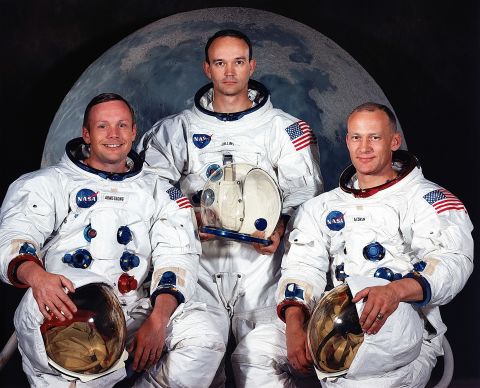
This is what heroes look like: ordinary men of flesh and blood, with extraordinary skills and courage.  (NASA) 


Friday, June 21, 2019

Giant squid captured on video

Actually, the title says it all.  A young (3-meter) Architeuthis, the monster squid of legend, was caught for the first time on video on our side of the Pacific, thanks to enterprising sciences who rigged LED lights into a jellyfish-like circle and lowered it deep into the dark domain...

Article and image from NOAA
NOAA-Funded Expedition Captures Rare Footage of Giant Squid in the Gulf of Mexico