Of Orcas and Men: What Killer Whales Can Teach Us
David Neiwert
Overlook Press, NY, 2015
305pp
This is a very good book on the history and effects of orca-human interaction, from ancient Native American stories to the slaughters of the 20th century and the turn toward conservation in the 21st. Seattle journalist Neiwert has spent a great deal of time with scientists studying orcas, and he gives us a lot of facts in the course of a compelling narrative. He doesn't try to provide every known detail: there are other books for that, such as Robin Baird's classic Killer Whales of the World. (Interestingly, Neiwert uses the name "orca" throughout, although scientists are more and more going back to the old "killer whale.")
Neiwert admires the animals and considers things like personhood, but he nearly always avoids slipping into Jon Lilly-type woolly-mindedness (he does at one point refer to orcas' "fantastic sixth sense," but that's a quibble.). I learned a lot from this book I didn't know, especially about release efforts and proposals. (Some involve Miami Seaquarium's Lolita, an animal I saw in the mid-70s but didn't realize until recently had been in that little tank alone for so many years and was still there.) The sad saga of Willy/Keiko is here, too.
Neiwert considers orcas and the media, including the effect of movies such as the positive Free Willy (not the remake) and the stunningly awful thriller Orca. (He missed a family film I liked as a kid, Namu the Killer Whale, a very pro-orca film.) He spends a lot of time on the continuing global impact of the documentary Blackfish. (To be fair, the marine park industry challenged the accuracy of Blackfish, and their arguments should at least be acknowledged, but Neiwert does mention the genuineness of the affection between orcas and their keepers even as he argues passionately for an end to captivity.) The issues concerning the environment and ecology, especially as they affect his favorite orcas, the Southern Resident pod, are covered in depth.
I would have liked more photos and some illustrations of the whale-studying gear he often discusses, but the author achieves his purpose: to make us think more about orcas and how we can protect them. An excellent addition to the literature on Earth's apex predator.
Saturday, September 26, 2015
Friday, September 18, 2015
Book review: Whales, Dolphins, and Porpoises
Whales, Dolphins, and Porpoises:A Natural History and Species Guide
Annalisa Berta, ed.
U. of Chicago, 2015
288pp, large-format hardcover
Wow. I'm still digesting it, but this book is very impressive.
In this overview of the cetacean world, Professor Berta marshals a variety of solid, up to date information, from whale biology and evolution to feeding techniques to range maps and field marks, with 2-4 page descriptions of 89 known species. Recent entrants like Daraniyagala's beaked whale, Omura's Whale, the Australian snubfin dolphin, and the narrow-ridged finless porpoise are all here. An interesting line in the long-finned pilot whale entry (by Jessica Aschettino, one of 37 named contributors) is "G.m. un-named subspecies." The killer whale section (by Robert Pitman) lists the animal as a single species with "at least six distinct ecotypes that may in fact represent different species or subspecies." Uncertainty about the exact delineations of minke whales, Bryde's, and others are also mentioned. For you mesoplodon fans, there are 22 species of beaked whale described in a section written by Randall Reeves.
The book is beautiful as well as informative. Photographs and other illustrations are plentiful, well-labeled, and helpful. The text is authoritative but highly readable to the nonexpert like myself.
The only quibble I have is with the physical book: the binding feels flimsy and the pages don't lie flat: handle it with care. (OK, there are two quibbles - killer whales deserve more than 2 pages, and there should be illustrations, at least silhouettes, of the differences between ecotypes).
Overall, though, this book is a magnificent achievement and a very useful reference.
Wednesday, September 16, 2015
And the website is back up
www.mattwriter.com is functioning again.
Also, you may be cool, but you will never be as cool as this magnificent orca, painted for my next book by the awesome wildlife artist Rebekah Sisk.
:
Also, you may be cool, but you will never be as cool as this magnificent orca, painted for my next book by the awesome wildlife artist Rebekah Sisk.
:
New species: handsome and deadly
Not all new species are harmless little invertebrates or cute mammals. The Kimberly death adder, about 60cm long, is undeniably a handsome creature, with its banded brownish-orange body and white belly, but it's just as undeniably dangerous. Acanthropis cryptamydros joins numerous other species of death adders all over the Australasian region. The number of known reptiles has passed 10,000 and is still rising steadily. (The official 10,000th was a gecko from Laos.) One estimate is there are another 1,300 reptiles awaiting description, but it may be considerably higher. There's a lot of foliage left in the world to conceal species that are well adapted to their environments and generally good at hiding.
Friday, September 11, 2015
www.mattwriter.com is down for the moment
My website has vanished and I'm traveling and haven't figure it out yet. Will get it bcck soon.
Meanwhile, here's a NEW HUMAN. Yeah, science is cool
Tuesday, September 08, 2015
New digs for International Cryptozoology Museum
I've talked before about the ICM and Loren Coleman's efforts to provide a repository for artifacts, print materials, and everything else related to cryptozoology. Whether you think cryptozoology is an intriguing branch of zoology or a pesudoscience where amateurs chase nonexistent animals actually doesn't matter when it comes to the ICM. Animal science and animal folklore are important to every culture and country the world, and the ICM's collection of tens of thousands of items is simply not replaceable. It provides an invaluable trove for scientists, folklorists, researchers of animal myth and legend.
Accordingly, it's nice to see the Museum moving from downtown Portland, Maine to a larger permanent home. Loren announced the 10-year lease on a bigger property on Thompson's Point in the same city.
By the way, the ICM is currently hosting, on loan from the Museum of the Weird in Austin, TX, the original Minnesota Iceman, a hoax creature made with considerable care and detail.
The Iceman once prompted two qualified scientists (Bernard Heuvelmans, Ivan Sanderson) to declare a new species of primate had been discovered. The ICM offers a chance to see a major piece of bigfoot history.
Don't forget, the ICM's first sponsored conference is coming in January in Saint Augustine, FL. Yours truly will be there to talk about bears in zoology and cryptozoology - a hot topic in the wake of Bryan Sykes' book. I've never managed a visit to the ICM, despite being a Mainer by birth. It's still on my list. Good luck!
Accordingly, it's nice to see the Museum moving from downtown Portland, Maine to a larger permanent home. Loren announced the 10-year lease on a bigger property on Thompson's Point in the same city.
By the way, the ICM is currently hosting, on loan from the Museum of the Weird in Austin, TX, the original Minnesota Iceman, a hoax creature made with considerable care and detail.
Iceman in Argosy magazine
(copyright unknown, as company has folded: educational fair use claimed.)
The Iceman once prompted two qualified scientists (Bernard Heuvelmans, Ivan Sanderson) to declare a new species of primate had been discovered. The ICM offers a chance to see a major piece of bigfoot history.
New location for the ICM (see note #8).
Used by permission of the ICM
Tuesday, September 01, 2015
Sea scorpion - the size of a shark
The eurypterids or sea scorpions were the invertebrate kings of the seas 400 million years ago. For a while, before the armored fish known as placoderms got to be the size of small buses, they were unchallenged. The largest species ever had spiked claws a half-meter long and could slice and dice anything it was likely to meet. (This was also before the nautilus-like ammonites started putting on weight - the monster Parapuzosia seppenradensis, 2 meters across, didn't show up until the Cretaceous and was not seen again until 1957, when something that might have been its much-evolved descendant starred in the delightful grade-B creature film The Monster That Challenged the World.)
Anyway, we have a new entry in the "scariest giant invertebrate with killer claws" category. Pentecopterus decorahensis, some 460 million years old, was found in Iowa, USA. It is described as 1m long with the usual eurypterid armor and armament. It's the oldest such animal yet discovered, but it can't be THE oldest because it's surprisingly evolved. The whole family tree of its larger group, the carcinosomatoids, is accordingly screwed up. That, however, is how science works. For palentologists, the cool things is that they now know that looking in older rocks for sea scorpions is well worth their time. There are discoveries to be made!
Yale University: Used under educational/journalistic "Fair Use)
Anyway, we have a new entry in the "scariest giant invertebrate with killer claws" category. Pentecopterus decorahensis, some 460 million years old, was found in Iowa, USA. It is described as 1m long with the usual eurypterid armor and armament. It's the oldest such animal yet discovered, but it can't be THE oldest because it's surprisingly evolved. The whole family tree of its larger group, the carcinosomatoids, is accordingly screwed up. That, however, is how science works. For palentologists, the cool things is that they now know that looking in older rocks for sea scorpions is well worth their time. There are discoveries to be made!
Yale University: Used under educational/journalistic "Fair Use)
Tuesday, August 25, 2015
Neil Armstrong, died on this day 2012
I watched the liftoff live in person (Thanks, Dad), fell asleep for the first step, watched the return live on TV. There could have been no better choice for Earth's hero..
Thursday, August 20, 2015
Cryptozoology, culture, and folklore
How do we know whether to evaluate a cryptozoological
report, especially an old one, in the light of the witness's or recorder's
culture? Does it matter if the culture has a strong "monster"
tradition? The always-interesting Sharon
Hill gave her take on this in a Doubtful News post this week.
I thought that was a very good take, reminding us that we
can't just assume what we want from old accounts, be they presented as facts or
legends. (By the way, if you think all cryptozoology is nonsense, keep reading anyway: this isn't about whether it has value as a science, but where the reports in it originate and how to treat them)
The "Father of Cryptozoology," Dr. Bernard Heuvelmans, offered a
good example about cultural and linguistic context. He said a future reader shouldn't take literally
a modern description of an animal that had "fire in its eyes" and ran
"like lightning." The animal might be a normal, real creature - a
lion, say - but if you don't understand the language and its fondness for
metaphors and similes, you might look at that and chuckle, "Silly myth.
21st-century people would believe anything. “ (Arguably, we do, but to continue...) The point is there's no easy rule.
Sasquatch poses a good example. Sasquatch-like creatures are widespread in Native American lore, but the origins and meaning of these stories are difficult to evaluate, especially for the non-Native (or, for that matter, the modern Native disconnected from old traditions, which is hardly uncommon.)
The Salish word from which “sasquatch” is derived refers to a supernatural creature, not an animal. At the same time, many Native cultures didn’t recognize the sharp divide we scientifically-minded moderns do between natural and supernatural entities, so the situation is confused further. (On the other hand, zoologist Ivan Sanderson wrote in the 1960s that, when one Indian was asked about the subject, the reply was a derisive, “Oh, don’t tell me the white men have finally gotten around to that.”)
Sasquatch poses a good example. Sasquatch-like creatures are widespread in Native American lore, but the origins and meaning of these stories are difficult to evaluate, especially for the non-Native (or, for that matter, the modern Native disconnected from old traditions, which is hardly uncommon.)
The Salish word from which “sasquatch” is derived refers to a supernatural creature, not an animal. At the same time, many Native cultures didn’t recognize the sharp divide we scientifically-minded moderns do between natural and supernatural entities, so the situation is confused further. (On the other hand, zoologist Ivan Sanderson wrote in the 1960s that, when one Indian was asked about the subject, the reply was a derisive, “Oh, don’t tell me the white men have finally gotten around to that.”)
Sharon wrote, referencing Michel Meurger’s 1989 book Lake Monster Traditions: A Cross Cultural Analysis, “I admit surprise to find out
that the maned serpent is so old a concept. Meuger says the origin of today’s
sea serpent concept is a product of the Enlightenment drawn from Nordic stories
of giant snakes. “
This is a unique and valuable book, but there's one thing
the author seems to treat lightly when discussing the Scandinavian lindorm and
other creatures of legend, and it's the same thing Prothero and Loxton skipped
over in their generally excellent book Abominable Science when discussing the
mythical hippocampus. That is that a legendary creature may influence a future
witness's interpretation of a sighting, but it also may not. The authors in
both these books present the legendary forebears of reported cryptids as
important even though a particular witness may be living generations later and
may have never heard of the story. Jay M. Smith pursues a version of this in
Monsters of the Gevaudan: The Making of a Beast, about a wolflike creature that
killed many people in pre-revolutionary France.
The cultural background he described and used to frame the beast stories
is alleged to have influenced peasants who may have not had the least idea of
what increasingly free newspaper publishing in Paris meant, or indeed that it
existed. (Sociologists in general tend to irk me by assuming a specific
incident is related to a bigger trend when it may not be.) (Another book, by the way, that doesn’t get
into cryptozoology but provides a valuable overview of the whole “why we like monsters”
question is Stephen T. Asma’s On Monsters.)
To go back to sea creatures, the lindorm and its cousins,
for example, seem to me likely to have precisely zero bearing on the one of the
most famous sightings, the 1905 Nicoll/Meade-Waldo case. This is one of the
"gold standard" cases, in which two qualified natural scientists on a
yacht off Brazil spotted a long-necked animal they were certain was an unidentified
species. What we know for sure is that the witnesses saw an animal, and one of
two things happened: either they accurately described an unknown species or
misidentified a known species. You can argue either way, but there's nothing to
indicate tales told by their ancestors were involved. It's worth noting in this
case that Meade-Waldo was aware of another "sea serpent" sighting,
the 1848 encounter by the HMS Daedalus, and thought that creature might be the
same (although the Daedalus reported no fin and his creature had a very
prominent one.) So, while ancient legend
had no bearing, it might be that another cryptozoological report did. A lot of
modern cryptozoologists write the Daedalus episode off to a giant squid, which
it probably was, but it was very much an unknown in 1905.
That leads us down another interesting path. Let's do a little thought experiment. Say I am hiking near my home in Colorado and
spot a big, dark, lumbering figure from a distance. I know it’s at least human-size and on two
legs, but that’s all I can be certain of at this distance and lighting. If I
knew nothing of Bigfoot, I might consider two possibilities: a human and a
bear. Since I do know of Bigfoot, even
though I'm skeptical about it, I am likely to think of three possibilities. Having three vs. two options, no matter what
they are, creates some (if hard to define) increase in the possibility I might
misidentify the animal.
Now, let’s go one further: creatures we know are legendary. If I think I see a huge winged fire-breathing
thing, it’s either a dragon or it isn’t. If I didn’t have the legend of the
dragon, I couldn’t put such a thing into any handy context at all. I would essentially have to make up my own
legend. In this case, science would come
to my rescue: dragons as commonly depicted have unrealistic proportions for a
flying animal, and a flying animal that size isn’t possible at all in our
gravity and atmosphere, therefore I didn’t see one. If I didn’t know the science, I might be more
inclined to lean on the legend. The 21st century, with the internet and global television empires, has created a situation where everyone knows the major creature legends, or some snippet of them: Merguer couldn't have imagined such a world in 1989.
Where does all this leave us? In an unsatisfactory fugue,
really. I reject the idea that cryptozoological
reports can be dismissed if the beast as reported bears some resemblance to a
legend, but I also acknowledge the
existence of a legend makes it somewhat more likely I might ascribe an
uncertain sighting to something it isn’t.
Know the context: know the language: know the culture and the trends:
but never forget an individual report might have nothing to do with any of
them.
Tuesday, August 11, 2015
Of Whales and Satellites
It would be really cool (and useful) to track whales via satellite imagery. Of course, the whales have to cooperate by being at or near the surface. Assuming they are, can we spot them and tell that they are whales? The Ikonos satellite service reports its WorldView2 satellite can spot whales. WorldView2 has a maximum resolution of 50cm, so a whale is going to appear of decent size: a whale showing 20m of back at the surface will be 40 pixels long and maybe 6 pixels wide (wider if the flukes are showing.) There is a lag in how often one satellite in low Earth orbit (LEO) can look at a given patch of ocean, though, so it can't keep continuous track of a pod.
Planet Labs can keep continuous watch on an areas when it's finished deploying its nanosatellites (5kg each (really) and offering 3-5 meter resolution), A whale may be only a pixel wide and a few pixels long, though, I had a chance to ask co-founder and CTO Chris Boshuizen about it at the Conference on Small Satellites. He's looked at this because people have sent in Planet Labs images and asked if some objects visible are whales. Chris doesn't see whale-tracking from his satellites as practical: a whale is, at best, a tiny smudge indistinguishable from a boat. Planet Labs started out not intending to image watery areas at all but now goes out 40 km from all coastlines. We also discussed whether whales, with their blubber insulation, have enough of a heat signature to be spotted in the infrared band (he doubts it). He can spot pollution plumes in the water and sediment flows, though, so Planet Labs, which has a strong ecological mission, can contribute to the study of inshore habitats. Thanks to Chris for taking the time to answer my questions!
Sunday, August 02, 2015
Cecil, and bigger issues
If I call myself a writer on science and nature, I need to
say something about Cecil. It's a tragedy this lion was killed, and a crime the
way it was lured. Everyone involved should face appropriate legal punishment.
This is a moment we should seize, though, to talk about all the issues
involved. Should we allow any trophy hunting?
Hunters argue the huge license fees support
often-impoverished local communities: opponents argue that money ends up with
corrupt officials instead. The lion is, at the least, a threatened species:
it's not in imminent danger of vanishing, but its numbers go down every year,
with the most vigorous animals, the huge males, being hunted the most. I'd say
the US should go beyond requirements of the CITES treaty and ban import of lion
trophies as we do of elephant tusks. A TIME magazine piece notes some blame
should go to Zimbabwean officials who created the poverty in their
once-thriving nation in a political land-grab that broke up productive farms
and game ranches because most were white-owned, plunging the whole nation into
extreme poverty where people will do anything for money or food. The leads to
another issue: should we give so much ink and airtime to Cecil in a land where
thousands of children are starving? I have no pity for the professional
poachers who make millions supplying traditional-medicine markets: shooting on
sight is a tempting remedy. But there are local people whose children are
hungry and will do anything, including poach a lion.
I don't have the answers to all these issues, but we should
talk about them. Mourn Cecil, but not only Cecil: think about how to prevent
poaching, balance human and animal needs, and build a sustainable future for
all.
Since part of the problem is the poor and corrupt system
prevailing in the nation housing the park from which Cecil was lured, I have an
idea I trot out every now and then for international parks: start with a
half-dozen wild areas the conservation world can agree are vital and create an
agency (UN, maybe, or something seen as less corrupt, like the OECD, which
isn't thought of as a conservation agency but could be become one in the
ecotourism era), to fund and administer on a continuing basis on an equal
footing with the nation (if there is one) owning the site. The Galapagos and
Okavango might be good places to start because of the universal recognition of
their importance: you could also start with the most endangered spots instead:
Conservation International maintains a list. There would be all kinds of
problems in practice, but exporting "America's best idea" on a
cooperative international seems wiser than having so much preservation depend
on year-to-year grants and political changes.
Thursday, July 30, 2015
Time to Howl - it's a new wolf!
Most discoveries of large animals these days (though not all!) are made in the lab, where similar-looking, or "cryptic" species are distinguished from relatives that look much the same. There are morphological as well as genetic differences behind this identification of a new wolf, though. The population known as the African golden jackal is, instead, the African golden wolf. To quote the attached article, "the authors were surprised to learn that African golden jackals are more closely related to grey wolves, even though there are no grey wolves in Africa and even though grey wolves and African golden jackals look dramatically different. "
You'll have to follow the link to see photos, since I try not to post copyrighted material, but it's a beautiful animal and another reminder that we don't know everything about the natural world.
Here's an old public-domain illustration, which is quite beautiful itself.
You'll have to follow the link to see photos, since I try not to post copyrighted material, but it's a beautiful animal and another reminder that we don't know everything about the natural world.
Here's an old public-domain illustration, which is quite beautiful itself.
Wednesday, July 29, 2015
Sea Creatures, Cryptids, and Seals
One of my favorite topics in cryptozoology is "sea monsters" or "sea serpents." Now, no one believes in giant marine snakes, and very few biological scientists believe in possible sea monsters at all, but there are a lot of people like myself who can't let go of the idea that something peculiar still lurks in the stories and legends of giant, sometimes terrifying creatures from the deep. Some reports are traceable to real creatures, like these oarfish. And the stories have provided inspiration for toys, hoaxes - sophisticated or silly - knick-knacks, books, movies, and so on.
The question is - are all such stories dismiss-able?
There's been a spate of recent blog/internet posts on the topic, and some make for intriguing reading.
A common speculation among cryptozoologists is that there's an unknown pinniped (seal) with a long neck. Seals have surprisingly long necks, though it's often not obvious because there is a lot of fat under the neck fur. The leopard seal, which is genuinely scary (and it should be, because it's definitely killed humans) looks like a long-necked reptile from some angles. The species' length is often cited as up to 10 feet, but men from the famed (doomed) exploration ship Endurance killed one as it was attacking and measured it at 12 feet.
I learned that from Karl Shuker's blog. Dr. Shuker (he's one of two Ph.D. scientists in the world who write on the "pro" side of marine cryptids: Darren Naish, much more cautious but still intrigued, is the other), published a two-part blog on the long-necked seal idea. (Part One, Part Two) He's pretty thorough. He ends up being very cautious: he notes there's fossil evidence for seals with slightly longer necks than modern ones, but nothing that could be taken for a swan-necked plesiosaur-like animal. He admits one case really stumps him: a closeup sighting by British lawyer Mackintosh Bell and a cod-fishing crew in 1919. Bell described his animal so thoroughly at close range that there are only two possibilities: Bell saw a long-necked seal, or the whole account is a lie. (It does not appear the fisherman friends who accompanied him ever set down accounts, so this case does depend on Bell's word, but he stood by it in correspondence with oddities investigator Rupert J. Gould.
Sea monsters are not popular these days: indeed, for most scientists, they never were. (Sir Richard Owen was an early and vociferous critic. I must note his treatment of the Daedalus crew in 1848 was unfair, despite the fact the latter probably saw a giant squid.)
But the grandfather of modern sea serpent stories, the Gloucester beast, arguably remains not quite explained. See Craig Woolheater's article for a good review. The episode started in 1638 and peaked in 1817. It's always been puzzling: it may may forever be puzzling. Even a cautious authority like Richard Ellis thought something strange had happened. The oft-invoked (and often true) explanation of "contagion" for "flaps" of odd occurrences seems inadequate: People were reporting big animals of a fairly consistent description that puzzled men who'd spent many years at sea.
In the 21st century, years can pass without a sea serpent report, near Gloucester or anywhere else. Is whatever animal might be at the basis of sea serpent stories rare, extinct - or was it never real?
I'd like to think it's just rare. I could be wrong. But I hope I'm not.
The question is - are all such stories dismiss-able?
There's been a spate of recent blog/internet posts on the topic, and some make for intriguing reading.
A common speculation among cryptozoologists is that there's an unknown pinniped (seal) with a long neck. Seals have surprisingly long necks, though it's often not obvious because there is a lot of fat under the neck fur. The leopard seal, which is genuinely scary (and it should be, because it's definitely killed humans) looks like a long-necked reptile from some angles. The species' length is often cited as up to 10 feet, but men from the famed (doomed) exploration ship Endurance killed one as it was attacking and measured it at 12 feet.
I learned that from Karl Shuker's blog. Dr. Shuker (he's one of two Ph.D. scientists in the world who write on the "pro" side of marine cryptids: Darren Naish, much more cautious but still intrigued, is the other), published a two-part blog on the long-necked seal idea. (Part One, Part Two) He's pretty thorough. He ends up being very cautious: he notes there's fossil evidence for seals with slightly longer necks than modern ones, but nothing that could be taken for a swan-necked plesiosaur-like animal. He admits one case really stumps him: a closeup sighting by British lawyer Mackintosh Bell and a cod-fishing crew in 1919. Bell described his animal so thoroughly at close range that there are only two possibilities: Bell saw a long-necked seal, or the whole account is a lie. (It does not appear the fisherman friends who accompanied him ever set down accounts, so this case does depend on Bell's word, but he stood by it in correspondence with oddities investigator Rupert J. Gould.
Sea monsters are not popular these days: indeed, for most scientists, they never were. (Sir Richard Owen was an early and vociferous critic. I must note his treatment of the Daedalus crew in 1848 was unfair, despite the fact the latter probably saw a giant squid.)
But the grandfather of modern sea serpent stories, the Gloucester beast, arguably remains not quite explained. See Craig Woolheater's article for a good review. The episode started in 1638 and peaked in 1817. It's always been puzzling: it may may forever be puzzling. Even a cautious authority like Richard Ellis thought something strange had happened. The oft-invoked (and often true) explanation of "contagion" for "flaps" of odd occurrences seems inadequate: People were reporting big animals of a fairly consistent description that puzzled men who'd spent many years at sea.
In the 21st century, years can pass without a sea serpent report, near Gloucester or anywhere else. Is whatever animal might be at the basis of sea serpent stories rare, extinct - or was it never real?
I'd like to think it's just rare. I could be wrong. But I hope I'm not.
Saturday, July 18, 2015
Sykes' The Nature of the Beast, revisited
The Nature of the Beast: The First Genetic Evidence on the Survival of Apemen, Yeti, Bigfoot and Other Mysterious Creatures into Modern Times
Coronet Books, 2015. 336 pp.
While I write about cryptozoology, I rarely have anything to say about sasquatch: it’s not my area of concentration, and it seems so ridiculous that we’ve missed a huge species in North America that I’d like to write the whole thing off. I can’t quite do that to my satisfaction, though, because intelligent normal humans are still reporting – well, something. This book, though, is so compelling I’m going to analyze it in more depth than I did in my first posting on this subject.
In a field rife with ambiguity, Oxford genetics professor Bryan Sykes tried to do something definitive. He invited sasquatch, yeti, almas, and other assorted unknown-primate hunters to send him their best samples of hair, saliva, blood, etc. (mostly hair), and (using techniques in which he was recognized worldwide as an innovator) he would extract DNA and identify the species. After throwing out obvious known species and samples of doubtful provenance, he had 37 to test and got 30 good results: every one a known species. There was bear, horse, wolf, and human hair (and a raccoon sample from Russia: apparently there was once a release of captured raccoons into this country), but nothing to indicate a nonhuman primate.
Sykes is strongly critical concerning the tendency of cryptozoologists to seize on hair samples that are not identifiable or ignore evidence of contamination, as with the orang-pendek reports that got some people (including me) genuinely excited. The orang-pendek sample was claimed to be halfway between human and ape, an unsupportable and indeed meaningless statement. He finds the work of Dr. Melba Ketchum to be a mess of sloppy amateurism and impossible conclusions. Along the way we learn a lot about genetics and a little about the odd corners of said science: surprisingly, Sykes thinks fabled human-chimpanzee crosses would be infertile but not quite 100% impossible, even though his description of a region called 2T implies strongly that they are. Sykes identified the Russian “ape-woman” Zana as fully human, of southern African descent, apparently almost mute and horribly ill-used. He does wonder if such an exceptionally tall and healthy woman (apparently she was almost 2m tall and extraordinarily athletic) might be descended from an unrecorded African migration tens of thousands of years ago, rather than being a recently escaped slave or the daughter of such (slaves normally being poorly nourished and unhealthy). Such a radical idea, though, needs much more support than Sykes can offer to get any consideration by the larger scientific community.
When it comes to anecdotal evidence, Sykes starts off telling eyewitness stories as fairly as possible, from the viewpoint of the teller. He doesn’t even throw Justin Smeja’s “Sierra Kills” story into the “absurdity” pile, even though most sasquatch-hunters do. He tells of some interesting fieldwork alongside my friend Lori Simmons (of which more later). But when it comes to hard, cold science, he’s adamant: no one sent him a sample of any kind of nonhuman primate, even though he clearly WANTS there to be something incredible behind all this hominid-hunting. Sykes may be stern in his insistence on better science, but he is a friend to cryptozoologists. He did turn up some samples that seemed to be of a very odd bear (a polar bear or brown-polar hybrid in the Himalayas, to be exact), which set off a furor of its own (also discussed below).
Now, back to his work with Lori Simmons, which I use here to highlight what a fascinating, multifaceted cultural phenomenon sasquatch is. Lori takes him to a tree whose roots apparently cover an underground den used by a sasquatch she calls the Big Guy, who her late father discovered. While she has barely glimpsed the Big Guy, she believes she’s communicated with him by leaving food, by stamping her foot (which draws sharp knocks and sometimes growls) and by accustoming him to the sound of her voice: she talks soothingly, as one might to a nervous horse. Sykes is quite taken by all this and wonders if he’s in real danger.
Sykes sets sticky-tape traps around the site but gets only a sample of Lori’s own hair. He visits the tree again with a ranger named Sage Bohme who suggests that a spot about 50 feet up where a big branch on one trunk knocks against another in a way that could send knocking noises down the trunk and mislead people about their place of origin. He wrote to Lori that this seemed plausible but that he was still puzzled by two aspects of the case, the reported growls and the apparent response to Lori stamping her foot are puzzling.
Sykes doesn’t believe Lori’s making things up (nor do I: I don’t know how to interpret some things Lori reports, but I’ve gone on record as denying she’s a hoaxer. Lori has invited me out to try the stomp-and-knock communication in person, and I’ll take her up on that when I can. Definitely not hoaxer behavior). Still, as Sykes notes, it’s easy to ascribe woodland sounds and activities to a creature you think is there, even when you can’t be certain.
Lori, commenting on the book for me, is steadfast, noting Sykes agreed there are still some problems and adding, “I thought Sage's theory was going to be dismissed. The food we left out was taken and consumed on the site. Also in some instances, by the creature having to unwrap chocolate, etc., in order to do it. In one experiment (cryptozoologist) Adam Davies did, it had to unwrap an egg from tissue paper. The egg was consumed, the paper intact. It does not explain the growling, the knocks on the ground, or the increase in intensity in response to our behavior. Also, the frequency of the growls is not dependent on the weather. There was even a time back in March of 2013 at dusk I saw what I believe to be a Bigfoot/Sasquatch only yards from the den.” Lori’s next book, Tracking Bigfoot: the Journey Continues, will tell her side of the adventure.
A comment Lori adds from her dad is worth mentioning: “October 2008: A very deep, guttural sound came from off to my right and near the creek. It kind of resembled an irate brahma bull only with a deeper sound. This sounded very dangerous-what a horrible change after it had been so quiet and peaceful earlier. I stayed still for a few minutes-no sound- so I decided to go against my better judgment and walk slowly towards where I had heard it. I only got about halfway to the creek when I heard a knock sound back and below where I'd just come from: so I did an about-face and headed in that direction, slowly. I went over a small ridge and into a mini valley. It's expertise in camouflage, hiding and superb stealth in the forest or elsewhere, and possible (in my opinion) great strength. Seeing some hardwood trees broken off about twelve feet high convinced me. But, even more impressive was how the big guy jarred the ground I was standing on and could actually make the ground tremble.” You can attribute this to a mix of natural events like storms damaging trees and maybe a bear, but it kind of raises the hackles on your neck.
To go back to Sykes, he published his theory about bears and came under immediate skeptical fire. Writing in Skeptical Inquirer, taxonomists Ron Pine and Eliecer Guiterrez strongly dismissed this work, arguing Sykes was relying on a short DNA sequence that was within the variability of modern brown bears. Sykes took a shot in reply at the overuse of statistics and bioinformatics, and I’m not going to try to work out those arguments, but suffice to say that interest in a potential hybrid bear as the Yeti seems to have dropped off.
Some cryptozoologists have complained that Sykes tested only about a third of the “good” samples (those that were not immediately ruled out on the grounds of unverifiable provenance, obvious artificiality, etc.), but Sykes is on solid ground here: he chose the samples that seemed most likely to represent an unknown primate. He wanted to find such an animal. He did not.
Despite the flaws, this book is an important one. Sykes has taken the best evidence offered by unknown-primate hunters worldwide and shown that it is, without exception, not up to snuff. That doesn’t mean Bigfoot cannot exist, but it means the bar has been raised. Extraordinary claims require extraordinary evidence, and Sykes’ work shows we don’t have it.
In addition to Sykes’ book, sources consulted include:
Personal communications with Lori Simmons: personal communications between Bryan Sykes and Lori Simmons, shared with permission; FaceBook posts by Pine and Sykes: Sharon Hill, “Sykes’ reputation and his Yeti project get slammed,” Doubtful News, April 5, 2015: and Pine and Guiterrez, “No Reason to Believe That Sykes’ Yeti-Bear Cryptid Exists,” Skeptical Inquirer v.39#4, July/August 2015.
Tuesday, July 14, 2015
Arriving at life's Plutonian shore
We're here. And Pluto, with its huge basic, few craters, and odd color, looks nothing like we might have expected. So much to learn....
"These are the voyages of the starship NASA. Its continuing mission: to explore strange new worlds; to seek out new life and new civilizations; to boldly go where no one has gone before! "
Congratulations to the New Horizons team!
"These are the voyages of the starship NASA. Its continuing mission: to explore strange new worlds; to seek out new life and new civilizations; to boldly go where no one has gone before! "
Congratulations to the New Horizons team!
Hey Mate, you don't don't want to know what we found off Australia
Well, yes, we do. They're fish apparently designed specifically to look as scary as hell. A government research vessel with new instrumentation, exploring the bottom off New South Wales, encountered small but totally alien-looking new species. Have a look. They were exploring a newfound patch of undersea volcanos and were surprised, among other things, to find many larval forms that it was thought developed entirely in coastal waters. Even a science writer is tempted to think, "No, fish like that shouldn't exist."
Friday, July 03, 2015
Pluto - a big surprise (and more to come today)
We expected Pluto to be a ball of frozen rock. It is, but it's an interesting-looking ball of frozen rock. The New Horizons spacecraft is giving us our first closeups of the planet (and yes, I will refer to it as a planet, now and forever), It's moon Charon has still-unexplained light-colored patches, and Pluto, which we knew was generally brownish-reddish because the frozen rock is covered in goop called tholins raining from the methane atmosphere, has spotty markings that are oddly regular. Cue the UFO buffs and the "giant alien bases" claims...
Update: New Horizons has lost contact and gone into "safe mode." This happens with deep space probes, and many recover, but there's not too much time if we're going to get a closer flyby out of this voyage.)
Details, answers, and more questions for a planet that appears more complex the closer we get.
Update: New Horizons has lost contact and gone into "safe mode." This happens with deep space probes, and many recover, but there's not too much time if we're going to get a closer flyby out of this voyage.)
The faces of Pluto (NASA)
UPDATE: "We're here!" It's flyby day! Go, NASA!Details, answers, and more questions for a planet that appears more complex the closer we get.
For July 4, an explosion of new species
We don't know all the species on this planet. But how fast are we discovering them? It's still true, as the Times of India quotes a British WWF scientist, that, "The more scientists look, the more they find."
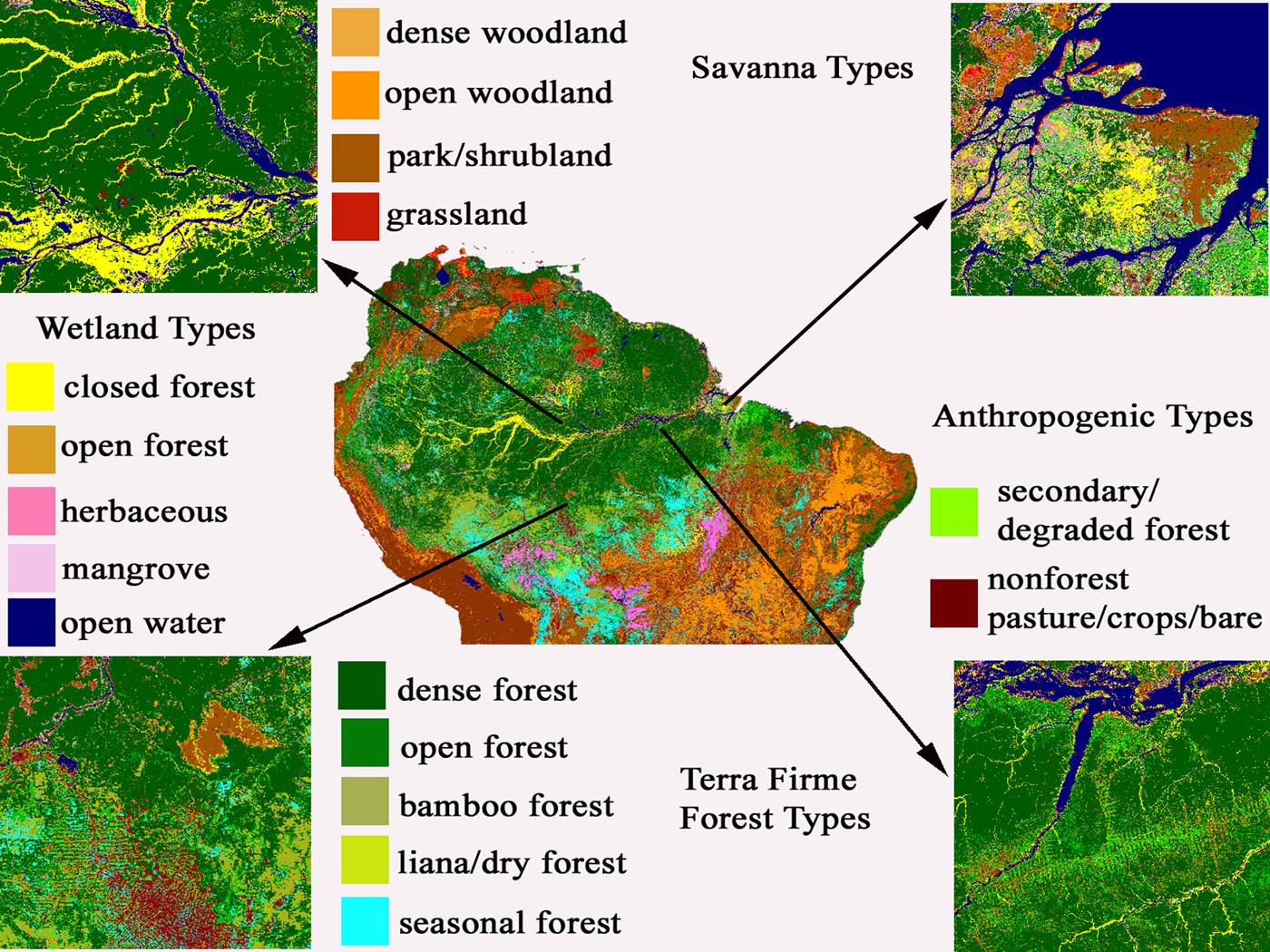
This particular compilation covers the discoveries in the Amazon basin over 2010-2013, a total of 441 species. Adorable purring monkeys? Got 'em. Vegetarian piranha? We have one of those, too. Two hundred and fifty-eight plants to go with 84 fish, 22 reptiles, 18 birds, a mammal, and 58 amphibians? Sounds about right.And again, those are just the plants and vertebrates. It's nearly impossible to keep up with the invertebrates: at the high end, entomologist Terry Erwin, whole collects insects so fast he assigns alphanumeric codes because there are too many species to award scientific names as they are found, thinks there could be 30 million tropical beetles, with a huge share of those in the Amazon.
This image from NASA breaks down the many types of habitats found in this area rich in plant and animal life.
Sunday, June 21, 2015
Wonderful Novel with a Tinge of Cryptozoology
At the Water's Edge
Sarah Gruen
Spiegel & Grau
368pp.
This is a magical novel, weaving fact and fiction together to set the scene for one troubled American wife's World War II venture to Scotland with her despicable husband. The people, the lake, and the maybe-there monster are all lovingly depicted along with the times. If it's a half-notch below Water for Elephants (one of my favorites among all modern novels), It is nevertheless superb in every way. I know a lot of the monster-related history, and Gruen uses much of it, tweaking it occasionally to suit her narrative (as when the allegedly hoaxed "Surgeon's photograph" become a real hoax created by the protagonist's father in law).Gruen puts us firmly, flawlessly into the time and place and explores life through the eyes of Madeline Hyde, a would-be independent woman in a very constricted life. She's never preachy about the oppression of women in those days (which, among the upper crust, included lobotomies when necessary to keep them in line): she lets her points flow honestly from her characters' experiences and emotions. This is a wonderful book, and I look forward to the next one.
Sarah Gruen
Spiegel & Grau
368pp.
This is a magical novel, weaving fact and fiction together to set the scene for one troubled American wife's World War II venture to Scotland with her despicable husband. The people, the lake, and the maybe-there monster are all lovingly depicted along with the times. If it's a half-notch below Water for Elephants (one of my favorites among all modern novels), It is nevertheless superb in every way. I know a lot of the monster-related history, and Gruen uses much of it, tweaking it occasionally to suit her narrative (as when the allegedly hoaxed "Surgeon's photograph" become a real hoax created by the protagonist's father in law).Gruen puts us firmly, flawlessly into the time and place and explores life through the eyes of Madeline Hyde, a would-be independent woman in a very constricted life. She's never preachy about the oppression of women in those days (which, among the upper crust, included lobotomies when necessary to keep them in line): she lets her points flow honestly from her characters' experiences and emotions. This is a wonderful book, and I look forward to the next one.
Sunday, June 14, 2015
Jurassic World: Science no, Fun yes
OK, I went to Jurassic World.
I understand why some paleontologists despise it - it wouldn't have hurt the movie to make the dinosaurs more in line with the latest scientific discoveries, and they should have taken the opportunity to make the dinos more accurate (which also would make them more visually interesting). In fact, the raptors are LESS accurate than in the last movie, and it's disappointing. (And, why, in the name of Roy Chapman Andrews, do we keep seeing them with cute little "bunny hands"?) And how can pterosaurs lift way more than their own weight? And why does the mosasaur look different sized in every shot, and why is it bigger than a blue whale to start with? And so on...
Nevertheless, this is a terrifically enjoyable monster movie, with the right balance of scary and funny moments. One death is drawn-out and gratuitous, but the rest of the violence is ok. The actors generally give good performances in the usual monster-movie stereotype roles. There are enjoyable nods to the original Jurassic Park, and there's a climax where my all-time favorite dinosaur gets on the screen again. The last joke, played out as people evacuate the control room, is a hilarious skewering of a common movie trope: I won't spoil it for you. There was a lot of predictability in the script, but the filmmakers did a decent job of hiding it. (You knew the sinister defense guy was going to die, but they made you wait for it.) And most of the ideas about what would actually be in a theme park of this sort, and how it would be marketed and run, seem pretty spot-on.
(Missed opportunity: a TV network should have had the older Ian Malcolm commenting on why you didn't need chaos theory to predict that a plan that twice ended in disaster was going to end, once again, in disaster. "They've removed the chaos. It's back to old-fashioned linear mathematical certainty.")
No, I don't believe in the super-powered Indominus rex. You don't get significant additive (that is, positive or enhancing) characteristics of another species as a random side effect of splicing in some genes for some other reason. That we MIGHT be able to someday design something like this - and I think we might - is a scary thought, though, and it works great in the movie. And the discussion over the creature's name is funny and entirely plausible.
The CGI (save for a couple of moments) is good, and if the mosasaur is insanely big and some of the dinosaur behavior makes no sense, well, I'm willing to forgive the filmmakers most of their faults, because they created great entertainment. Turn off your brain, grab your popcorn, and enjoy the action.
I understand why some paleontologists despise it - it wouldn't have hurt the movie to make the dinosaurs more in line with the latest scientific discoveries, and they should have taken the opportunity to make the dinos more accurate (which also would make them more visually interesting). In fact, the raptors are LESS accurate than in the last movie, and it's disappointing. (And, why, in the name of Roy Chapman Andrews, do we keep seeing them with cute little "bunny hands"?) And how can pterosaurs lift way more than their own weight? And why does the mosasaur look different sized in every shot, and why is it bigger than a blue whale to start with? And so on...
Nevertheless, this is a terrifically enjoyable monster movie, with the right balance of scary and funny moments. One death is drawn-out and gratuitous, but the rest of the violence is ok. The actors generally give good performances in the usual monster-movie stereotype roles. There are enjoyable nods to the original Jurassic Park, and there's a climax where my all-time favorite dinosaur gets on the screen again. The last joke, played out as people evacuate the control room, is a hilarious skewering of a common movie trope: I won't spoil it for you. There was a lot of predictability in the script, but the filmmakers did a decent job of hiding it. (You knew the sinister defense guy was going to die, but they made you wait for it.) And most of the ideas about what would actually be in a theme park of this sort, and how it would be marketed and run, seem pretty spot-on.
(Missed opportunity: a TV network should have had the older Ian Malcolm commenting on why you didn't need chaos theory to predict that a plan that twice ended in disaster was going to end, once again, in disaster. "They've removed the chaos. It's back to old-fashioned linear mathematical certainty.")
No, I don't believe in the super-powered Indominus rex. You don't get significant additive (that is, positive or enhancing) characteristics of another species as a random side effect of splicing in some genes for some other reason. That we MIGHT be able to someday design something like this - and I think we might - is a scary thought, though, and it works great in the movie. And the discussion over the creature's name is funny and entirely plausible.
The CGI (save for a couple of moments) is good, and if the mosasaur is insanely big and some of the dinosaur behavior makes no sense, well, I'm willing to forgive the filmmakers most of their faults, because they created great entertainment. Turn off your brain, grab your popcorn, and enjoy the action.
Subscribe to:
Posts (Atom)